Did you know that homes featuring authentic mid‑century modern design sell for up to 15% more than comparable properties, according to a 2021 real‑estate analysis? That’s the power of a well‑executed style, and with the right mid century modern living room ideas, you can transform your space into a timeless showcase without breaking the bank.
In This Article
- What You Will Need (or Before You Start)
- Step 1: Define the Color Palette
- Step 2: Choose Architectural Elements
- Step 3: Select Furniture with Clean Lines
- Step 4: Light It Up with Iconic Fixtures
- Step 5: Add Textiles and Soft Furnishings
- Step 6: Curate Art and Accessories
- Step 7: Arrange the Layout for Flow
- Common Mistakes to Avoid
- Troubleshooting or Tips for Best Results
- Summary Conclusion
- Frequently Asked Questions
What You Will Need (or Before You Start)
- Floor plan measurements: Record length, width, and ceiling height. Typical mid‑century rooms range from 12‑15 ft ceilings to 12‑18 ft walls.
- Budget worksheet: Allocate roughly 40% to furniture, 25% to lighting, 15% to textiles, 10% to art, and 10% to accessories.
- Key pieces: A low‑profile sofa (e.g., Joybird Eli – $1,299, 84 × 34 in), a teak coffee table (West Elm Mid‑Century Coffee Table – $599, 48 × 24 in), and a statement armchair (Article Sven – $799, 30 × 32 in).
- Paint & wall treatment: Low‑sheen eggshell in muted hues (e.g., Sherwin‑Williams “Sea Salt” SW 6204) – $38 per gallon, covers ~400 sq ft.
- Lighting fixtures: Sputnik chandelier (George Nelson reproduction, 30 in diameter – $450) and a floor lamp with brass accents (Archer & Olive Arc Lamp – $199).
- Accessories: Geometric rug (Ruggable “Mid‑Century” – $159, 5′ × 7′), ceramic vases (Heath Ceramics “Moss” – $85 each), and a vintage record player (Audio‑Technica AT-LP120XUSB – $299).
- Tools: Tape measure, level, stud finder, painter’s tape, and a cordless drill.
Step 1: Define the Color Palette
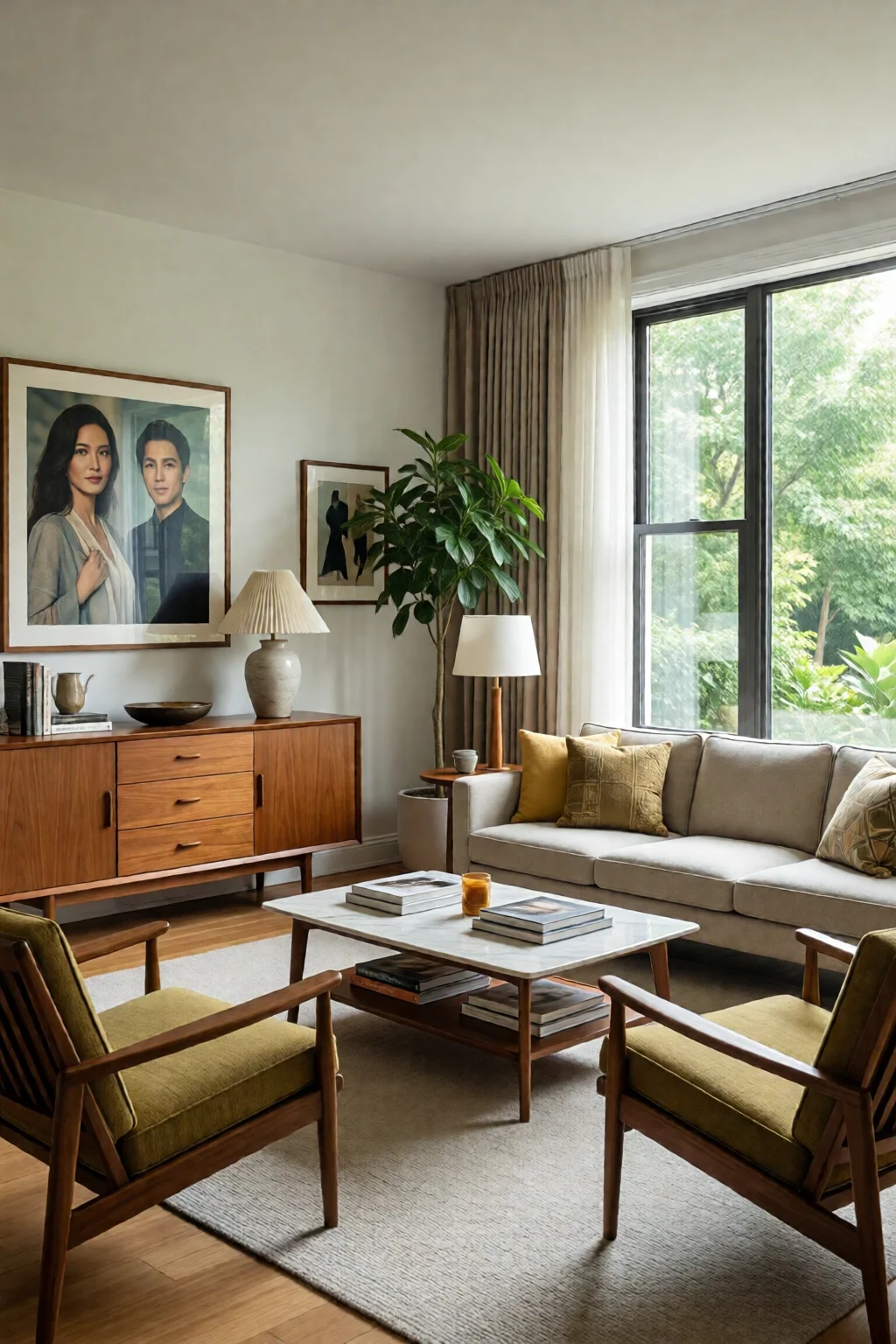
Mid‑century modern thrives on contrast: warm wood tones against cool, saturated accents. Start with a neutral base—think “Ballet White” (Benjamin Moore OC‑23) on walls. Then pick one bold hue for a feature wall or accent pieces: teal, mustard, or burnt orange are classics. In my experience, a single 12 × 12 in accent pillow in “Retro Orange” (H&M Home, $12) can anchor the palette without overwhelming the room.
Step 2: Choose Architectural Elements
Exposed wooden beams, built‑in shelving, and large windows are hallmarks. If you lack original beams, install faux pine crown molding (Moulding House, $2.50 per ft). For built‑ins, use walnut veneer panels (IKEA HEMNES — $149 per side). Position a low, floating credenza (CB2 Tallis, 60 × 18 × 24 in, $799) against a wall to maintain open sightlines.
Step 3: Select Furniture with Clean Lines
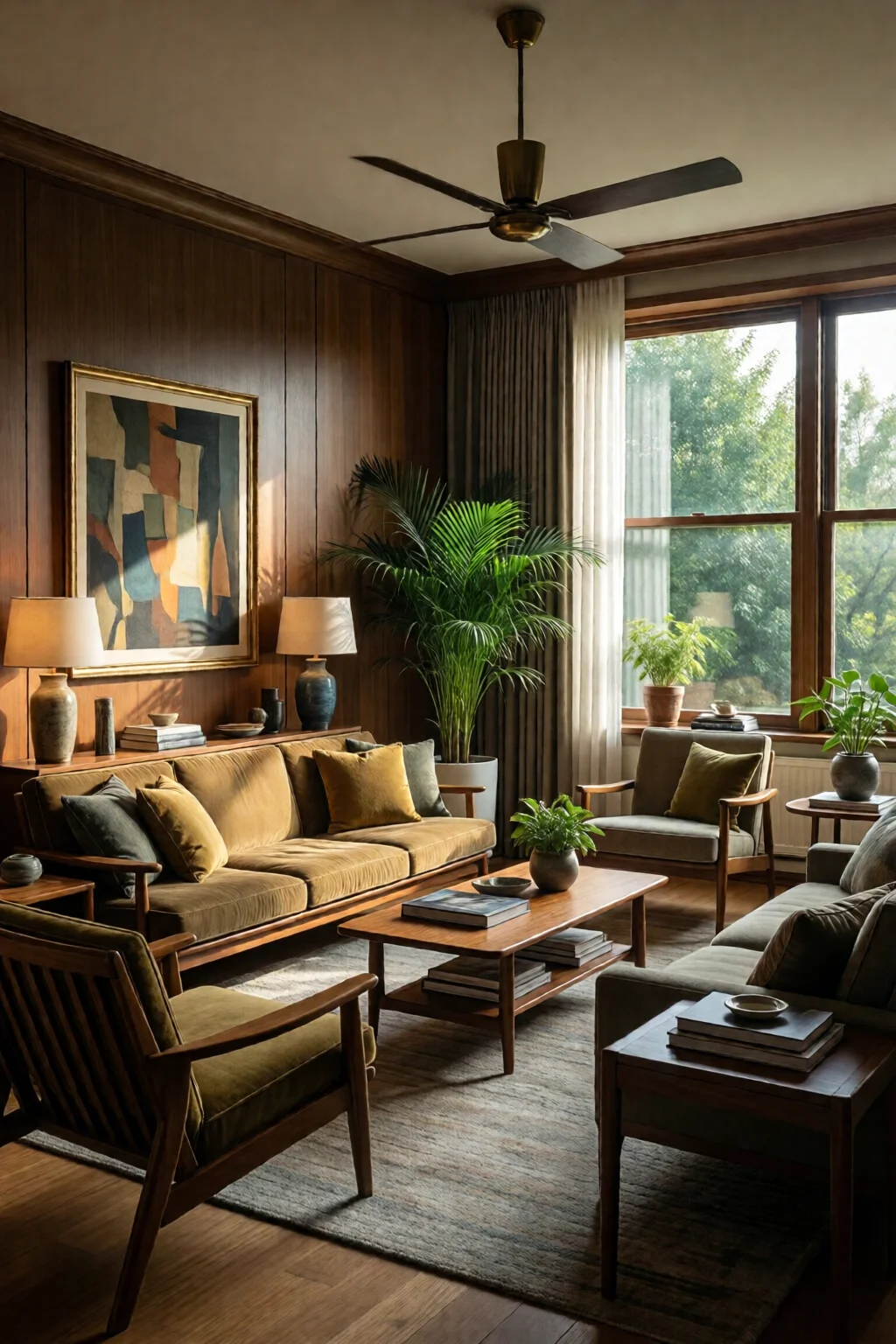
Focus on low‑profile, tapered legs. The Joybird Eli sofa mentioned earlier offers a 28‑inch seat height, perfect for the era’s “sitting low” feel. Pair it with a sleek teak coffee table; teak’s natural golden hue complements both neutral walls and bold accents. If space is limited, consider a modular sectional like the living room coffee table styling ideas piece from Article, which can be re‑configured as needs change.
Step 4: Light It Up with Iconic Fixtures
Lighting does double duty: illumination and sculpture. Hang a Sputnik chandelier centered over the coffee table, ensuring a 30‑inch clearance from the floor. Supplement with a floor lamp featuring a brass arc, placing it beside the sofa for reading. In my first remodel, swapping a standard flush‑mount for a Sputnik saved $150 and instantly upgraded the room’s aesthetic.
Step 5: Add Textiles and Soft Furnishings
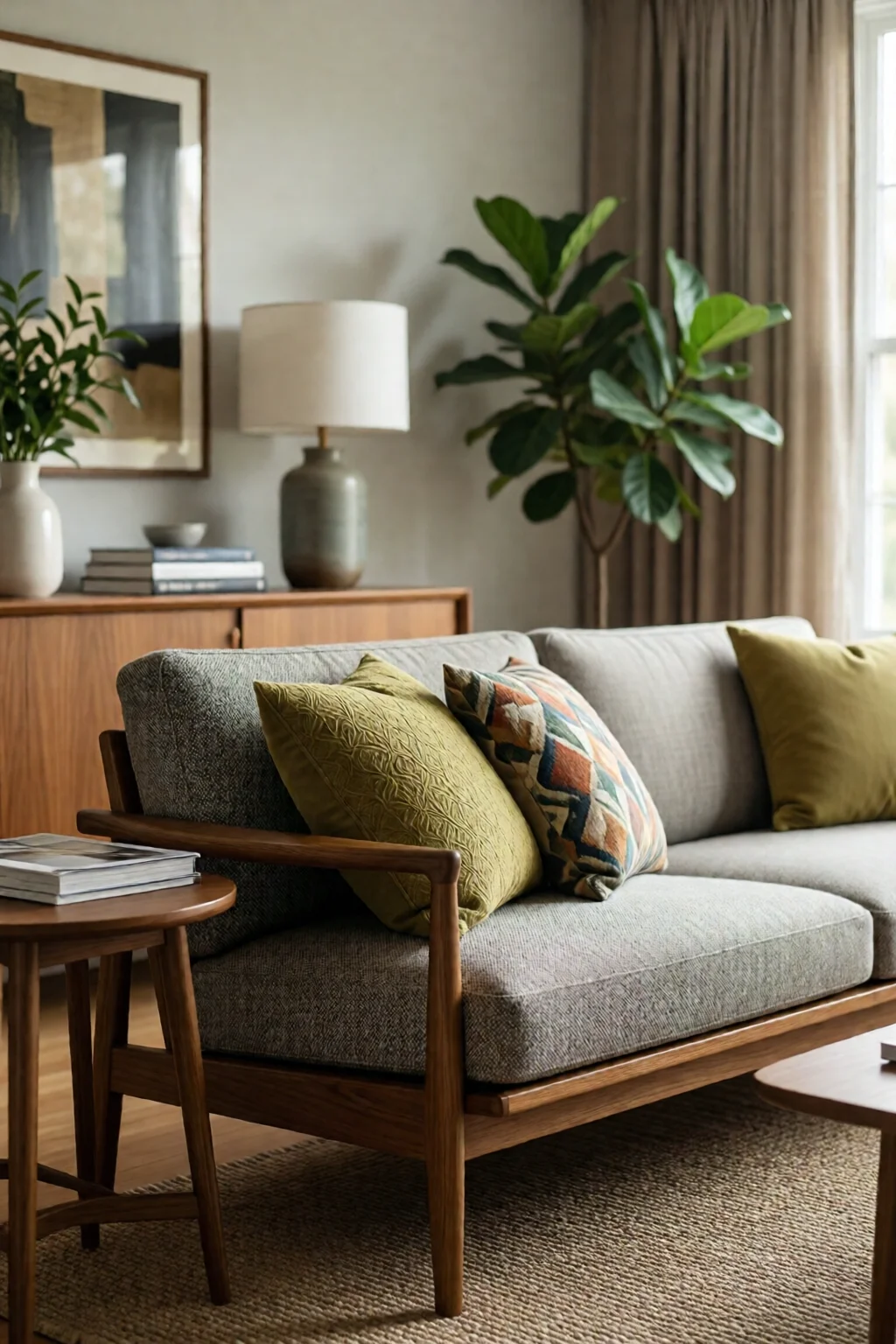
Geometric patterns are non‑negotiable. Choose a rug with a 3‑inch‑by‑3‑inch diamond repeat—Ruggable’s “Mid‑Century” offers durability and style at $159. Layer with linen curtains (West Elm “Linen Roll‑Up” – 84 × 96 in, $199) that hang just above the window frame to preserve vertical height. Throw blankets in natural fibers—think a 60 × 80 in Merino wool “Olive” throw from Brooklinen ($89).
Step 6: Curate Art and Accessories
Abstract expressionist prints or vintage atomic‑age posters add personality. Frame a 24 × 36 in “Abstract Sunset” print in a thin black metal frame ($75). Place ceramic vases on the credenza, and scatter a few retro books (e.g., “The Design of Everyday Things” – $22). A vinyl record player not only serves as décor but also provides a functional entertainment hub—perfect for a TV wall decor ideas and designs integration.
Step 7: Arrange the Layout for Flow
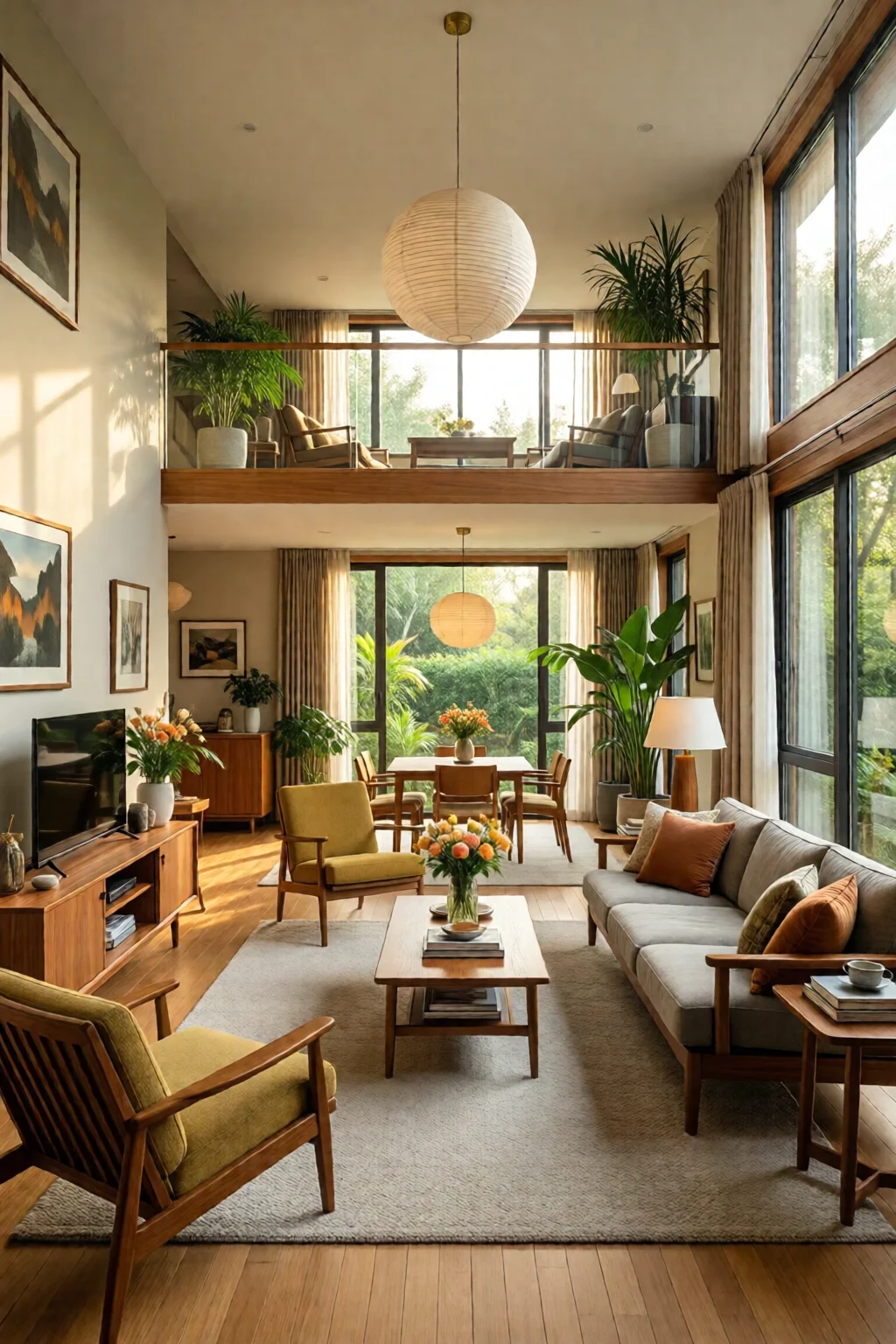
Mid‑century rooms favor open circulation. Position the sofa parallel to the longest wall, the coffee table centered 18 in away, and the armchair at a 45‑degree angle to create a conversational triangle. Keep traffic pathways at least 36 in wide. Use a floor plan app (RoomSketcher, free tier) to preview before moving heavy furniture.
Common Mistakes to Avoid
- Over‑accessorizing: Too many decorative objects clutter the clean lines. Stick to a 3‑item rule per surface.
- Choosing the wrong scale: A sofa larger than 8 ft overwhelms typical mid‑century rooms. Measure doorways; a 84‑in sofa fits most standard entryways without strain.
- Ignoring lighting layers: Relying solely on a chandelier creates harsh shadows. Add table lamps (IKEA RANARP, $29) for ambient balance.
- Using overly glossy finishes: Shiny lacquer clashes with matte wood. Opt for matte or satin paints and natural wood finishes.
- Forgetting functional storage: Mid‑century design is sleek but practical. Built‑ins or low cabinets keep clutter hidden.
Troubleshooting or Tips for Best Results
Problem: The room feels cold despite warm wood.
Solution: Introduce a soft, textured rug and layered throws. A 2‑inch‑thick wool rug adds warmth without compromising style.
Problem: Lighting feels too dim after sunset.
Solution: Install dimmable LED bulbs (Philips Hue White Ambiance, $39 per 60 W equivalent) in the chandelier and floor lamp. Set a 30% dim for a cozy vibe.
Problem: Furniture arrangement blocks the TV view.
Solution: Mount the TV on a low, floating console (CB2 Wall‑Mount TV Stand, 48 × 20 in, $399) and keep seating within a 10‑ft viewing distance. For a cohesive look, reference dark living room aesthetic moody decor for contrast.
One tip I swear by: use a single, bold piece—like a teal velvet armchair ($1,020) —as the focal point. It anchors the design and saves you from over‑decorating.
Summary Conclusion
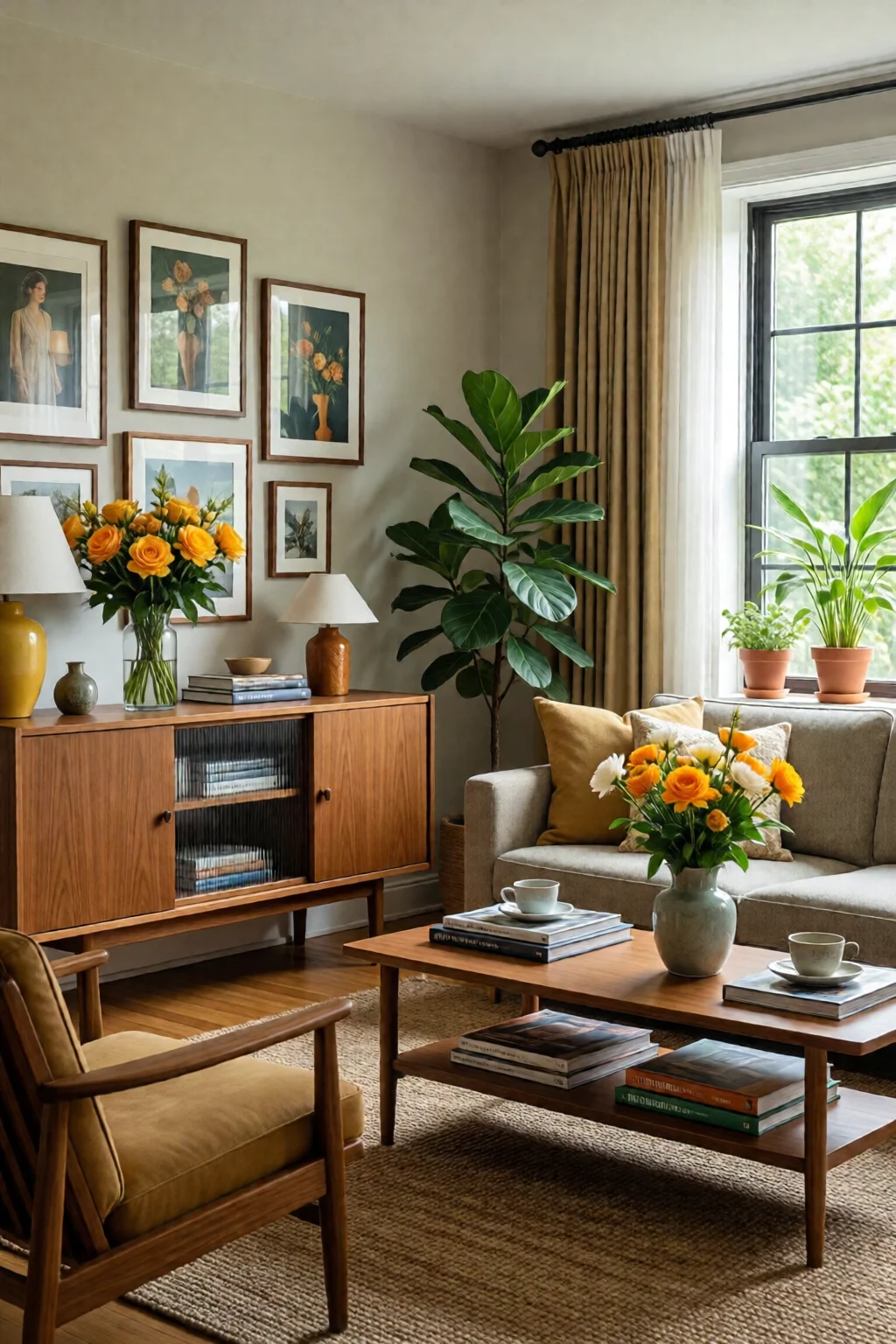
By following these mid century modern living room ideas, you’ll achieve a space that feels spacious, sophisticated, and instantly marketable. Remember: start with a solid color base, select furniture with tapered legs, layer lighting, and keep accessories minimal yet meaningful. With a budget of roughly $5,000–$7,500 (depending on brand choices), you can recreate an authentic mid‑century vibe that stands the test of time.
Frequently Asked Questions
How much does it cost to redecorate a mid‑century modern living room?
A full makeover typically ranges from $5,000 to $7,500, covering furniture, lighting, paint, rug, and accessories. Costs can be lowered by mixing high‑end pieces with budget‑friendly finds.
What paint colors work best in a mid‑century modern space?
Neutral bases like “Sea Salt” (SW 6204) or “Ballet White” (OC‑23) paired with accent walls in teal, mustard, or burnt orange create the classic contrast.
Can I incorporate a TV without ruining the aesthetic?
Yes. Mount the TV on a low, floating console or hide it behind a sliding panel. Keep the screen size proportionate—under 55 in for most rooms.
Where can I find authentic mid‑century furniture on a budget?
Consider retailers like Joybird, Article, and West Elm for sale sections. Thrift stores and estate sales often yield original pieces for $200–$500.
How do I maintain the wood tones over time?
Use a high‑quality polyurethane finish (Minwax Polycrylic, $30 per quart) and clean with a soft, dry cloth weekly. Avoid harsh chemicals that strip the finish.
1 commentaire sur « Mid Century Modern Living Room Ideas That Actually Work »