When my cousin first moved into a 6‑foot‑wide apartment, the hallway felt more like a tunnel than a welcome. He wanted to keep the space functional for coats and shoes, but also longed for a stretch of personality that didn’t scream “cramped.” After swapping out a dark runner for a bright, low‑profile rug and adding a few strategic mirrors, the hallway transformed from a bottleneck into a bright, inviting passage. In this guide you’ll learn how to replicate that makeover with hallway decorating ideas narrow spaces that are both stylish and practical.
In This Article
- What You’ll Need Before You Start
- Step 1: Measure and Map Your Space
- Step 2: Choose a Light Color Palette
- Step 3: Install Strategic Lighting
- Step 4: Add Functional Flooring
- Step 5: Maximize Wall Real Estate
- Step 6: Introduce Vertical Interest
- Step 7: Finish with Details and Accessories
- Common Mistakes to Avoid
- Troubleshooting & Tips for Best Results
- Summary
What You’ll Need Before You Start
- Measuring tape (preferably a 25‑ft retractable model) – about $12 at Home Depot.
- Sketchpad or free design app (RoomSketcher has a free version).
- Painter’s painter’s tape and drop cloths – $8 for a 60‑inch roll.
- Lightweight wall paint (e.g., Benjamin Moore “Simply White” – $55 per 1 gal, covers up to 350 sq ft).
- LED strip lights or a Philips Hue White Ambiance recessed kit – $69.99 on Amazon.
- Runner rug, 2.5‑ft wide, 8‑ft long (Wayfair “Dulles Runner” – $79).
- Wall mirror (Umbra “Hubba” 24‑in round mirror – $49).
- Floating shelves (IKEA LILLÅNGEN, 30 cm x 80 cm – $25 each).
- Artwork or gallery frames (West Elm “Gallery Wall Set” – $149 for 5 pieces).
- Hooks or coat rack (Rustic Metal “Picket” coat rack – $39).
- Optional: wainscoting panels (from wainscoting ideas for walls modern – $2.50 per sq ft).
Step 1: Measure and Map Your Space
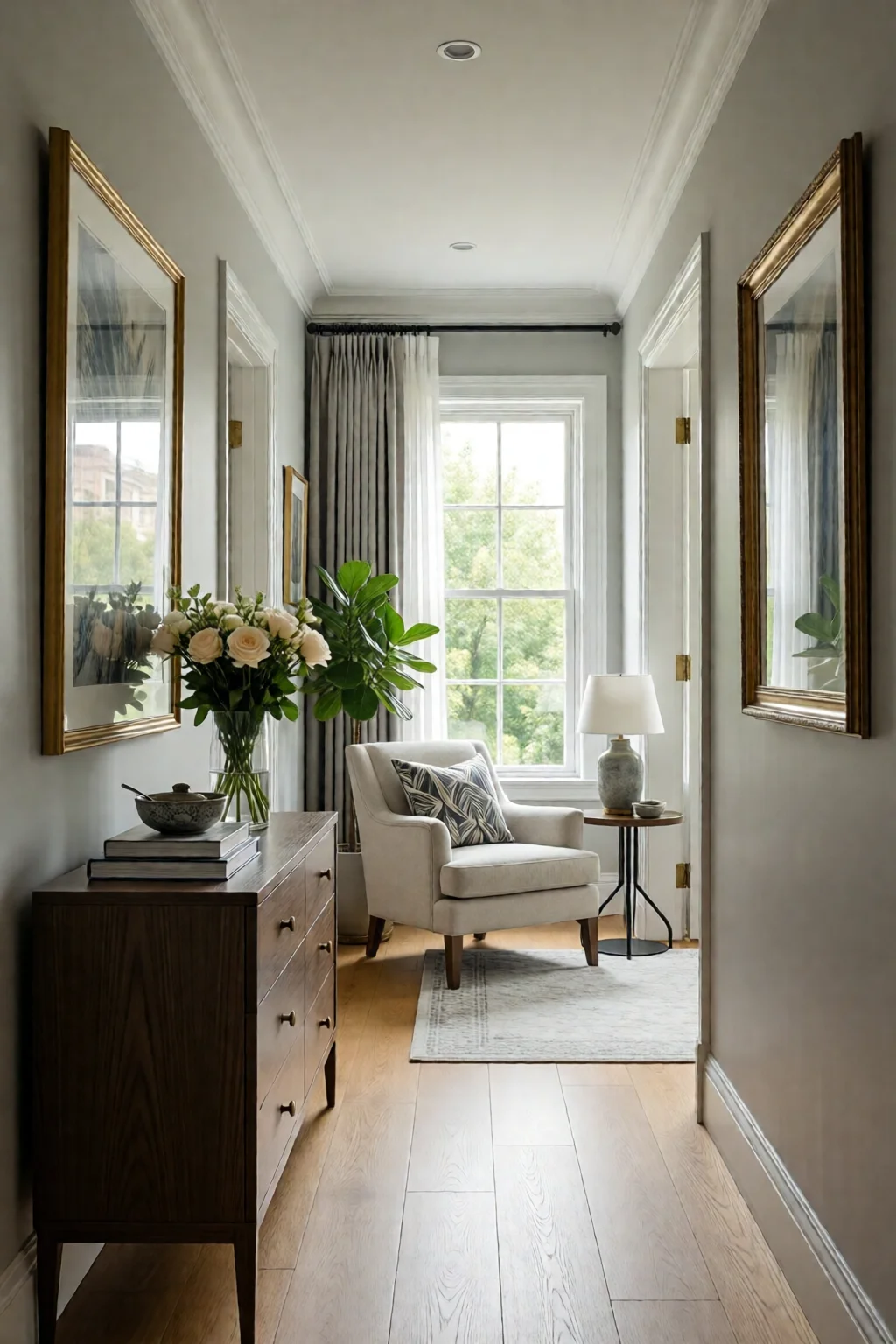
Start by measuring the hallway’s length, width, and ceiling height. For a typical narrow hallway, you’ll see widths between 30‑in and 36‑in. Write these numbers down and sketch a simple floor plan. Mark where doors, windows, and any built‑in closets interrupt the wall. This map becomes your canvas for placement of lighting, storage, and décor.
Step 2: Choose a Light Color Palette
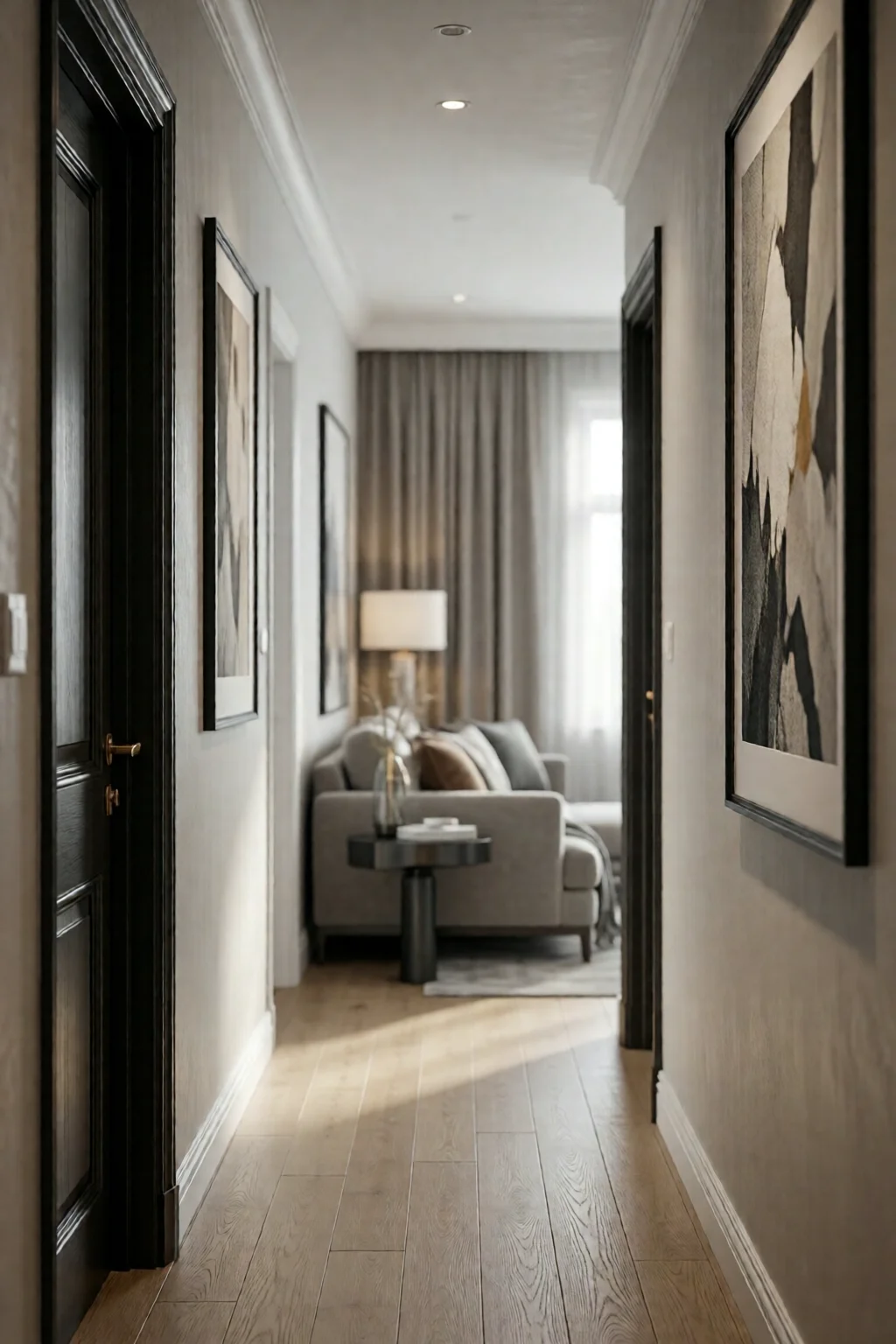
A light, reflective palette expands perception. Paint the walls in a hue with a reflectance value (R‑value) of 80+ – “Simply White” from Benjamin Moore scores a 92. If you prefer a hint of warmth, consider “Pale Oak” (R‑value 78) paired with white trim. Ceiling paint should stay pure white to bounce light upward.
For narrow spaces, avoid dark colors entirely; they compress the visual field by up to 20 % according to interior design studies.
Step 3: Install Strategic Lighting
Lighting is the secret weapon for hallway decorating ideas narrow spaces. Install recessed LED fixtures every 4 ft along the length; a 4‑watt dimmable LED provides ample illumination without bulk. Complement with a strip of Philips Hue White Ambiance around the ceiling perimeter – you can set a soft 2700 K for evenings and a crisp 5000 K for daytime.
Don’t forget a wall sconce at each end of the hallway. The DIY home decor ideas on a budget article recommends the IKEA “HEKTAR” wall lamp at $39.99; it adds a sculptural element while directing light down the corridor.
Step 4: Add Functional Flooring
Choose a runner that’s proportionate to the width. A 2.5‑ft wide runner leaves a 5‑inch border on each side, creating a floating effect. Materials like low‑pile polypropylene resist wear and are easy to clean. The Wayfair “Dulles Runner” (8 ft × 2.5 ft, $79) offers a subtle chevron pattern that adds movement without overwhelming the space.
Secure the runner with non‑slip rug tape ($10 for a 10‑ft roll) to prevent tripping hazards. If the hallway is prone to moisture (e.g., near a mudroom), consider a water‑resistant backing.
Step 5: Maximize Wall Real Estate
Vertical storage beats horizontal clutter in narrow hallways. Install floating shelves at 5‑ft height; they draw the eye upward, creating an illusion of height. IKEA’s LILLÅNGEN shelves support up to 20 lb each and cost $25 per pair.
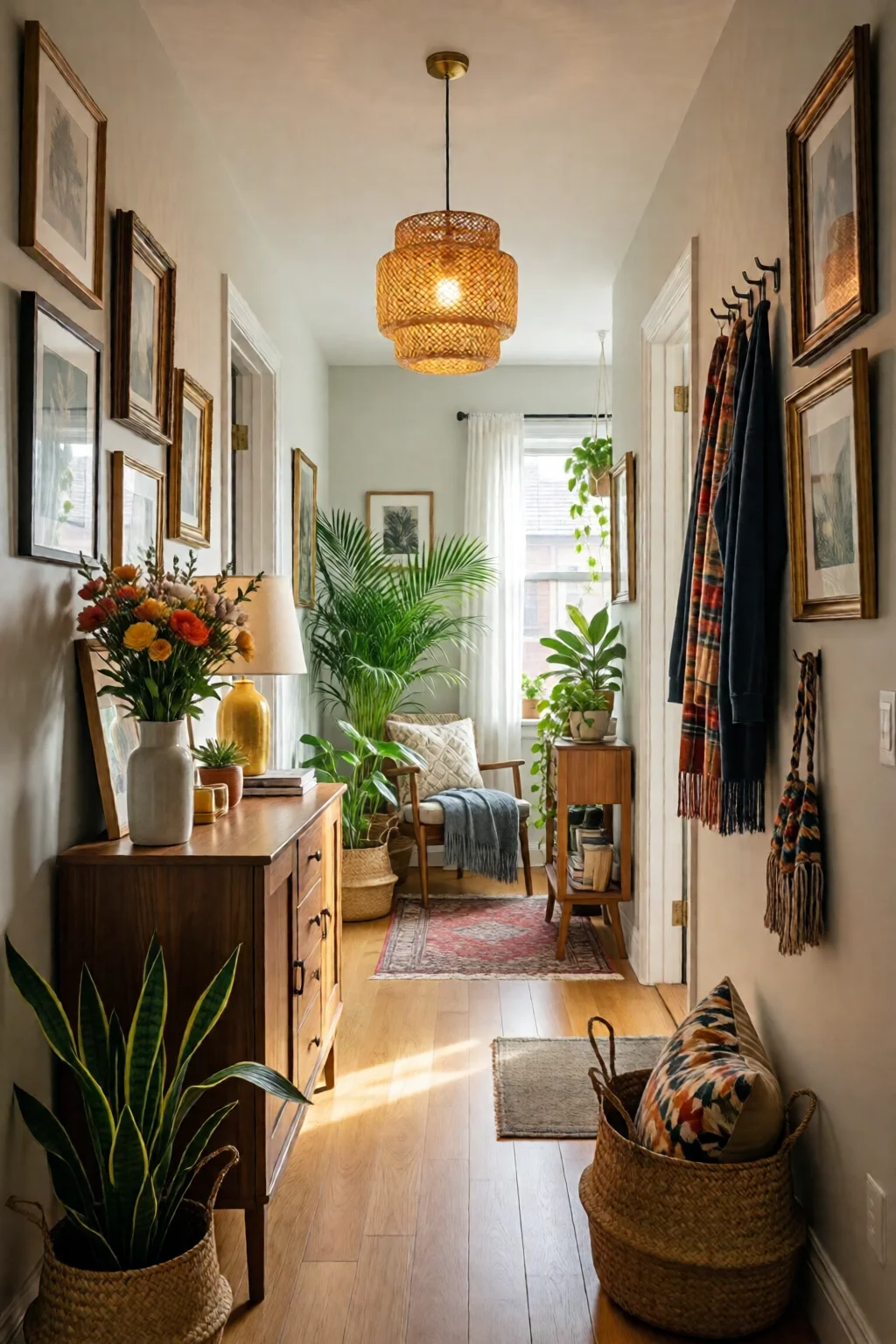
Use the top shelf for decorative plates or small sculptures, and the lower shelf for a slim coat hook rack. A single “Picket” coat rack (30‑in wide, $39) can hold up to 10 coats without crowding the floor.
Step 6: Introduce Vertical Interest
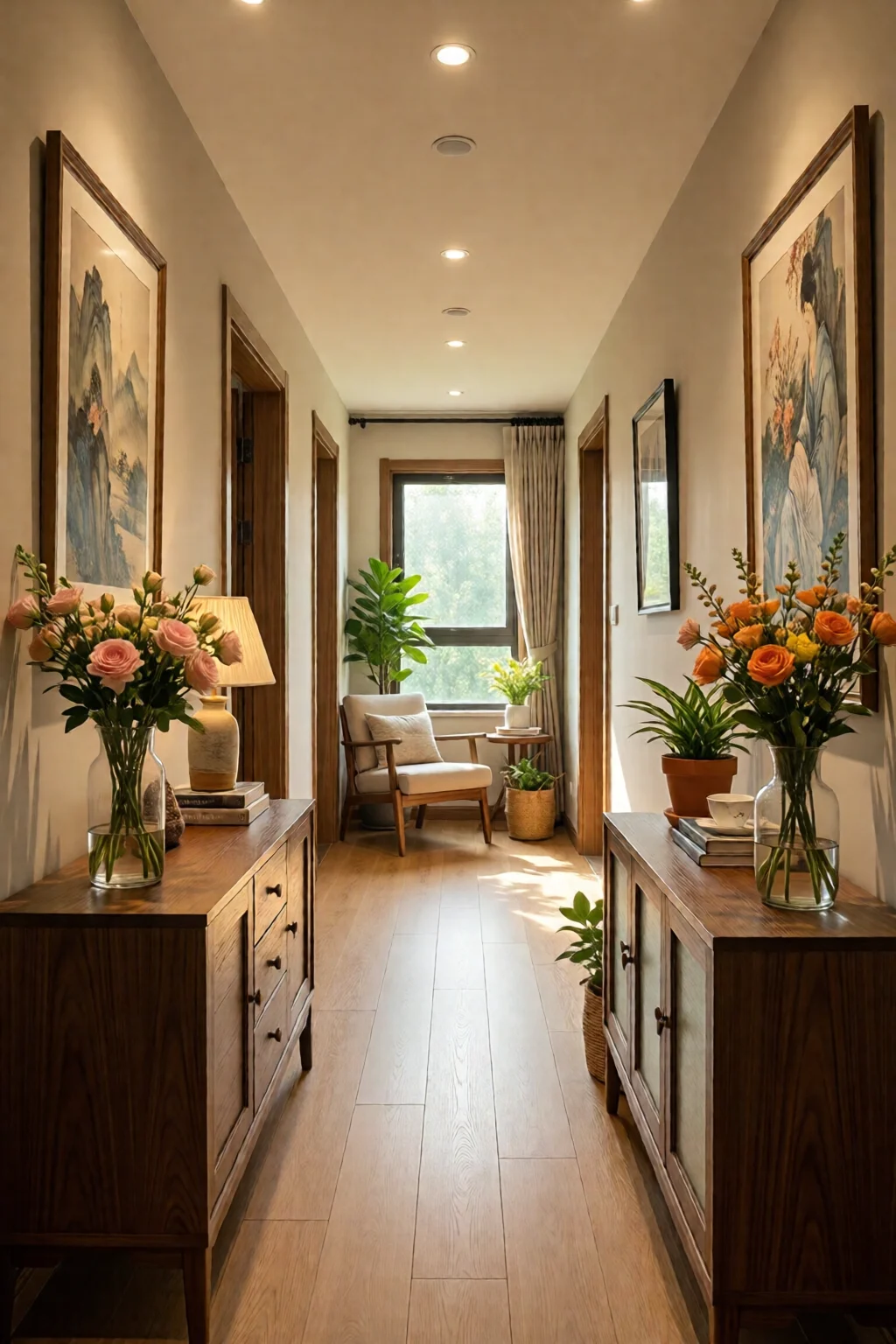
Mirrors are the most effective tool for expanding narrow spaces. Place a large round Umbra “Hubba” mirror (24‑in diameter, $49) opposite a light source to double the brightness. For a gallery effect, hang three West Elm frames (30 cm × 40 cm each) vertically, spaced 2 in apart. This pattern adds depth while keeping the wall’s visual weight light.
If you’re adventurous, consider a half‑wall wainscoting panel painted in a matte charcoal. At $2.50 per sq ft, a 4‑ft high wainscoting on a 30‑in hallway costs under $150 and provides texture without darkening the room.
Step 7: Finish with Details and Accessories
Small accessories seal the look. Add a narrow console table (IKEA “MALM” 12‑in deep, $79) against one wall for a decorative tray of keys, a vase of fresh eucalyptus, and a stack of books. Choose a tray in brushed brass to echo the hardware of the coat rack.
Finally, incorporate a scent – a small reed diffuser (e.g., Thymes “Linen & Sea Salt,” $24) placed on the console adds a welcoming aroma that lingers as you walk through.
Common Mistakes to Avoid
- Choosing a Dark Runner. Dark floors absorb light, making the hallway feel tighter. Stick to light neutrals or subtle patterns.
- Overcrowding Wall Art. Packing too many frames can overwhelm a narrow space. Limit to three vertical pieces or one large mirror.
- Ignoring Ceiling Height. Low ceiling paint should stay white; any accent color should be on the walls only.
- Using Heavy Furniture. Bulky chairs or a large console can block traffic flow. Keep furniture depth under 12 in.
- Skipping Light Switch Access. Ensure switches are reachable; install a smart dimmer if you want adjustable ambiance.
Troubleshooting & Tips for Best Results
Problem: The hallway still feels dim after installing lights.
Solution: Add reflective wall décor – a glass vase or metallic picture frame. Also, consider increasing the LED wattage to 6 W per fixture.
Problem: Runner rug slides on hardwood.
Solution: Use a rug pad with a non‑slip backing (e.g., Gorilla Grip, $15 for 3 ft × 10 ft).
Problem: Mirrors fog up in humid climates.
Solution: Apply a anti‑fog coating (Rust-Oleum “Anti‑Fog” spray, $9) or install a small dehumidifier in the adjacent room.
Bonus Tip: Paint the top half of the hallway walls a soft pastel (e.g., “Sea Glass” from Sherwin‑Williams) and the bottom half white. This vertical split visually raises the ceiling by up to 10 %.
Summary
With the right combination of light colors, strategic lighting, functional flooring, and vertical interest, hallway decorating ideas narrow spaces can turn a tight passage into a bright, functional gallery. Measure first, choose a palette that reflects light, and use mirrors and floating shelves to draw the eye upward. Keep furniture slim, avoid dark, heavy pieces, and you’ll end up with a hallway that feels open, welcoming, and uniquely yours.
How wide should a runner be for a 30‑inch hallway?
A runner that is 2.5 ft (30 in) wide leaves a 5‑inch border on each side, creating a floating effect that visually widens the space.
Can I use dark paint in a narrow hallway?
It’s best to avoid dark paint; it compresses the visual field. If you love darker hues, limit them to an accent wall and keep the remaining walls light.
What type of lighting works best for narrow hallways?
Recessed LED fixtures combined with a LED strip or smart lighting (e.g., Philips Hue) provide even illumination without consuming visual space.
How can I add storage without crowding the floor?
Install floating shelves or a narrow wall‑mounted coat rack. Keep the depth under 12 in to maintain a clear pathway.