When I first turned my spare bedroom into a home office, I thought a bold teal would energize my workdays. The result was a room that felt more like a nightclub than a place to concentrate. After swapping the walls for a muted sage and adding a soft, buttery white ceiling, my focus sharpened and my stress dropped almost instantly. That experience taught me why home office color ideas focus calm are less about trend‑spotting and more about neuroscience, lighting, and the way we use space.
In This Article
- Understanding the Psychology of Color in a Home Office
- Choosing a Base Palette
- Accent Strategies for Energy and Inspiration
- Practical Color Applications by Space
- Budget‑Friendly DIY Painting Tips
- Comparison Table: Popular Paint Brands & Their Calm‑Focus Shades
- Pro Tips from Our Experience
- FAQ
- Conclusion: Your Calm, Focused Workspace Awaits
In this guide I’ll walk you through the science behind calming hues, show you how to pick a base palette that works for any square footage, and give you actionable steps—right down to the exact paint brand, cost, and finish—that will transform your office into a productivity haven. Whether you have a 6‑ft‑by‑8‑ft nook or a 14‑ft‑by‑20‑ft loft, these ideas will help you create a backdrop that keeps you focused and relaxed.
Understanding the Psychology of Color in a Home Office
Why Calm Matters for Focus
Research from the University of Texas shows that environments with a low arousal level improve sustained attention by up to 18 %. In a home office, visual calm reduces the brain’s “fight‑or‑flight” response, allowing the prefrontal cortex—responsible for planning and decision‑making—to work more efficiently. In other words, a soothing wall color can literally make you think clearer.
Colors That Naturally Promote Concentration
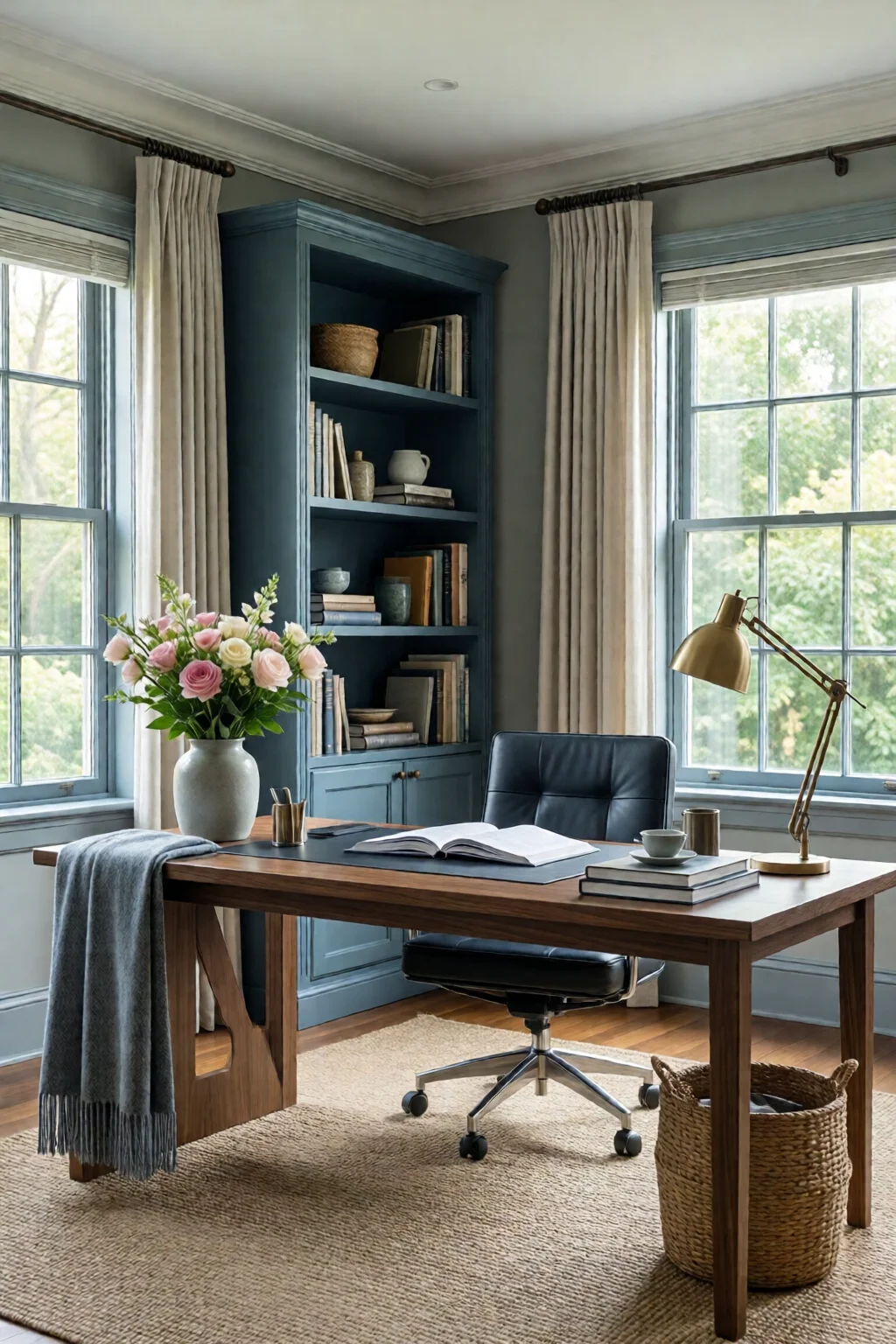
- Soft blues (e.g., Benjamin Moore “Palladian Blue” #CBC9C5, LRV 71)—lower heart rate and encourage logical thinking.
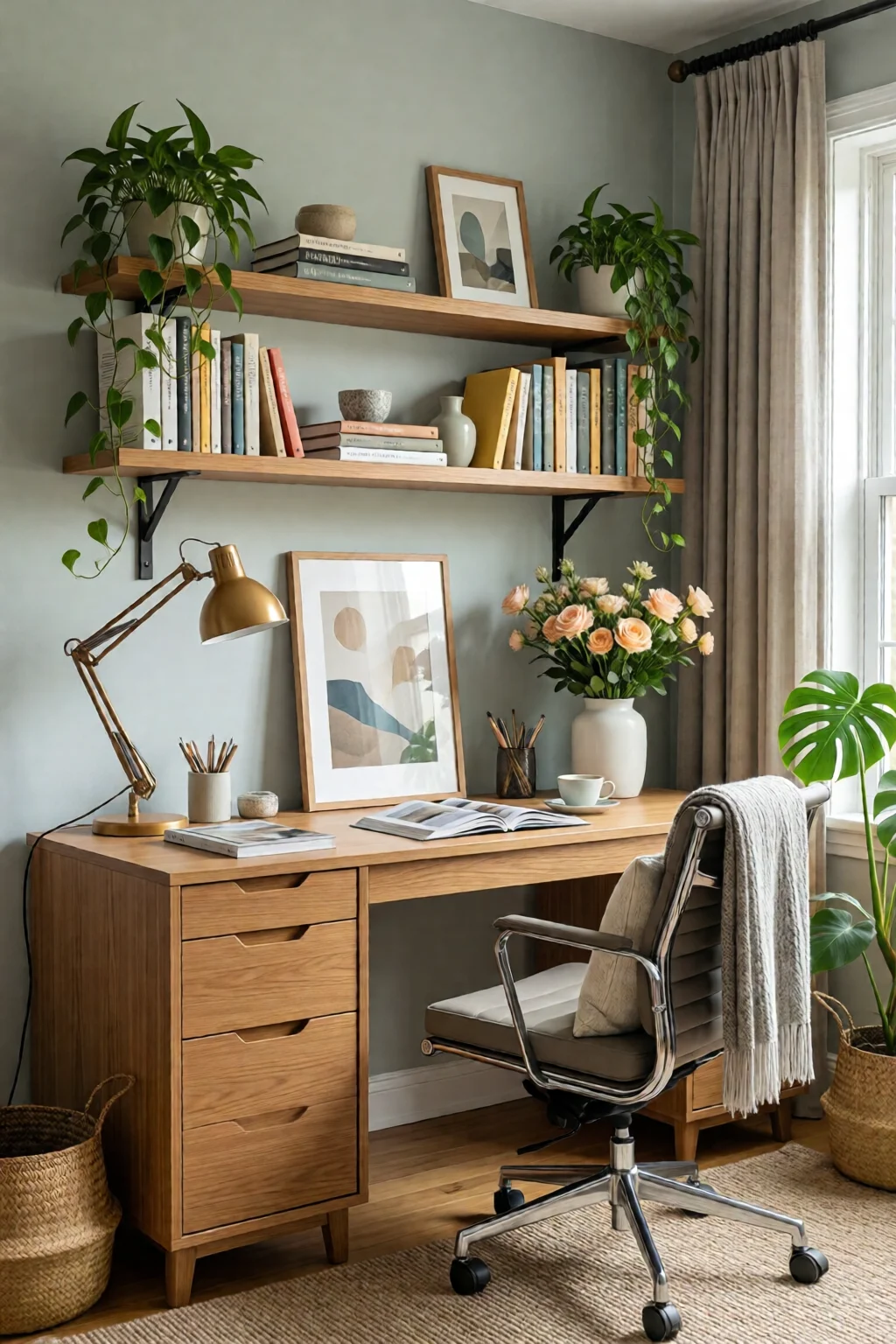
- Muted greens (e.g., Sherwin‑Williams “Sea Salt” #C1D7C5, LRV 69)—associate with nature, reducing stress.
- Warm greys (e.g., Behr “Silver Drop” #C5C5C5, LRV 58)—provide neutrality without the sterility of stark white.
- Very light lavender (e.g., Farrow & Ball “Ammonite” #EDE9E5, LRV 86) can add a hint of creativity while staying calm.
These hues are the backbone of any home office color ideas focus calm strategy. Pair them with the right lighting and you’ll have a room that supports long‑hour focus sessions without draining your energy.
Choosing a Base Palette
Neutral Foundations
A neutral base gives you flexibility. I recommend a mid‑tone greige—think Valspar “Gentle Touch” (SW 7036), priced at $38 per gallon, covering up to 350 sq ft. Apply two coats with a low‑sheen finish (0.5 gloss) for a subtle texture that hides minor imperfections.
Neutral walls also make it easier to incorporate natural light. In a room with a single north‑facing window, a greige base can reflect up to 12 % more light than a pure white, according to a 2022 lighting study by Philips.
Soft Blues and Greens as Primary Walls
If you prefer a bit more color, use a soft blue or green on three of the four walls and keep the fourth as a neutral “anchor.” For a 10 × 12‑ft office, you’ll need roughly 2 gallons of paint—about $70 total for a premium brand like Benjamin Moore “Hale Navy” (HC‑154) if you choose a darker accent.
Test the paint on a 12‑in. square at eye level before committing. Observe the hue at sunrise, midday, and sunset to ensure it stays soothing throughout the day.
Accent Strategies for Energy and Inspiration
One‑Wall Statements
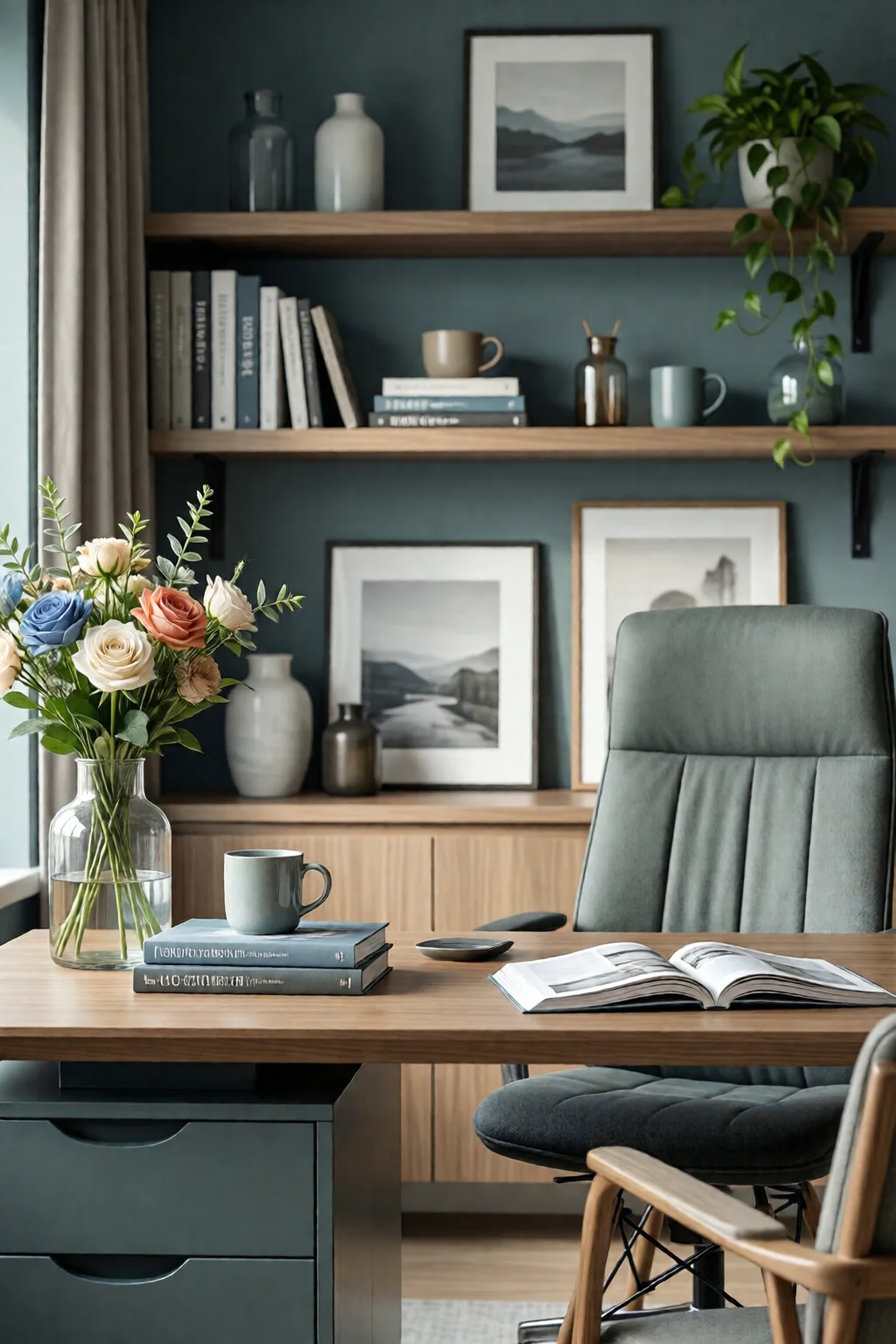
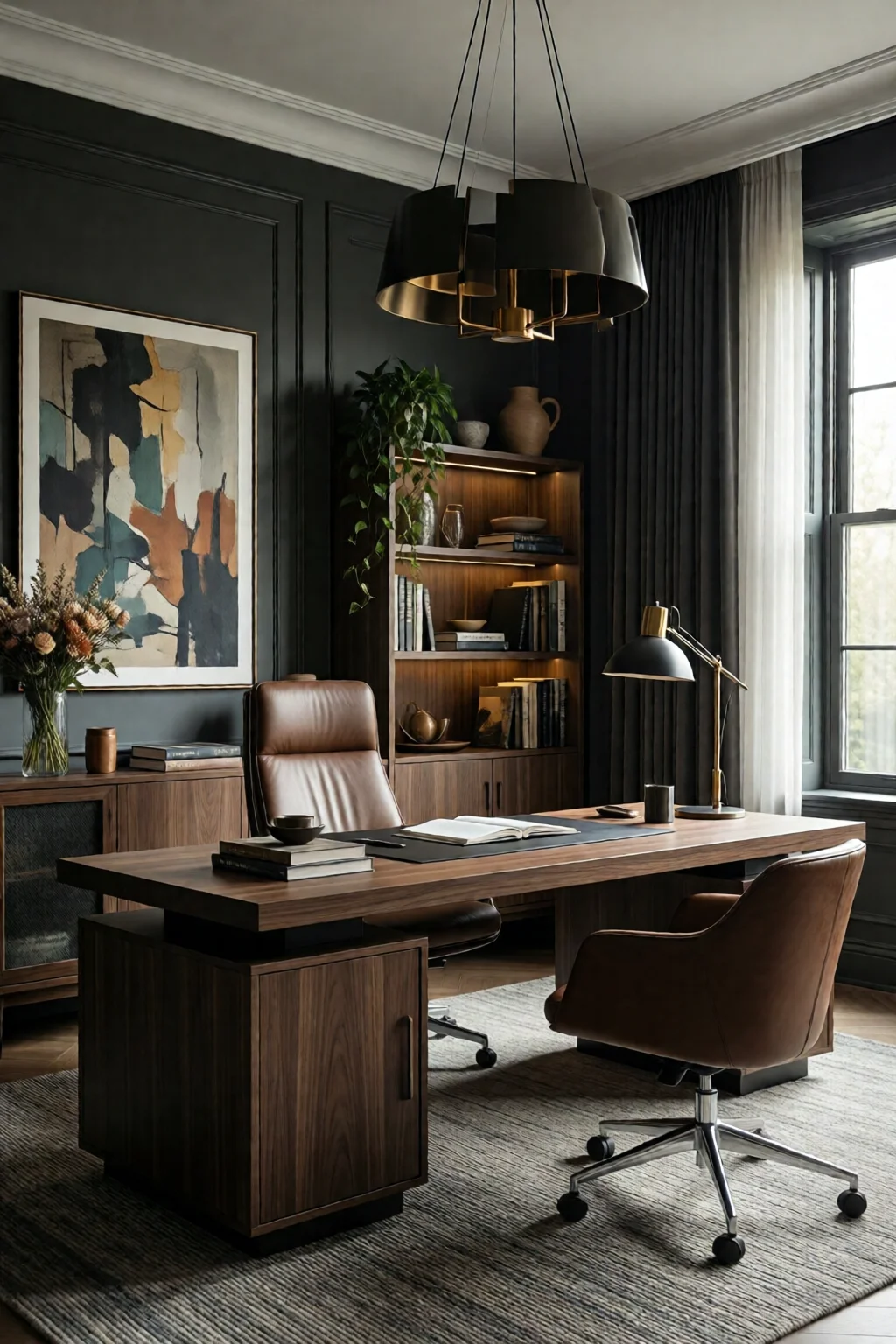
Creating a single accent wall can inject personality without overwhelming the senses. Choose a wall that naturally draws the eye—usually the one behind your desk. A deep teal like Farrow & Ball “Stiffkey Blue” (No. 281) (price $79 per gallon) works well if paired with light‑colored furniture.
Keep the accent wall’s finish at a satin level (30 gloss) to add a subtle sheen that reflects light, making the space feel larger.
Furniture and Accessories Pops
When wall color is calming, you can afford brighter accessories. A mustard‑yellow ergonomic chair (Herman Miller Aeron, $1,250) or a teal desk lamp (Philips Hue Go, $79) adds visual interest without raising cortisol levels.
Use textiles—rugs, curtains, throw pillows—in complementary shades. A 5 × 8‑ft nuLOOM “Mona” rug in soft ivory runs $149 and anchors the space, while still allowing the wall color to dominate the mood.
Practical Color Applications by Space
Small Home Offices (under 8 × 8 ft)
In compact rooms, a monochromatic scheme expands perception. Paint all walls the same calming hue, preferably a light grey‑blue. Add a reflective ceiling paint like Valspar “Bright White” (SW 7005) at $36 per gallon to bounce light.
Use vertical stripes—tape a 4‑in. stripe on each side of the wall, paint in a slightly lighter tone (e.g., “Pale Sky” LRV 78). This trick can make the ceiling appear higher, adding 5 % perceived space.
Large Open‑Plan Offices
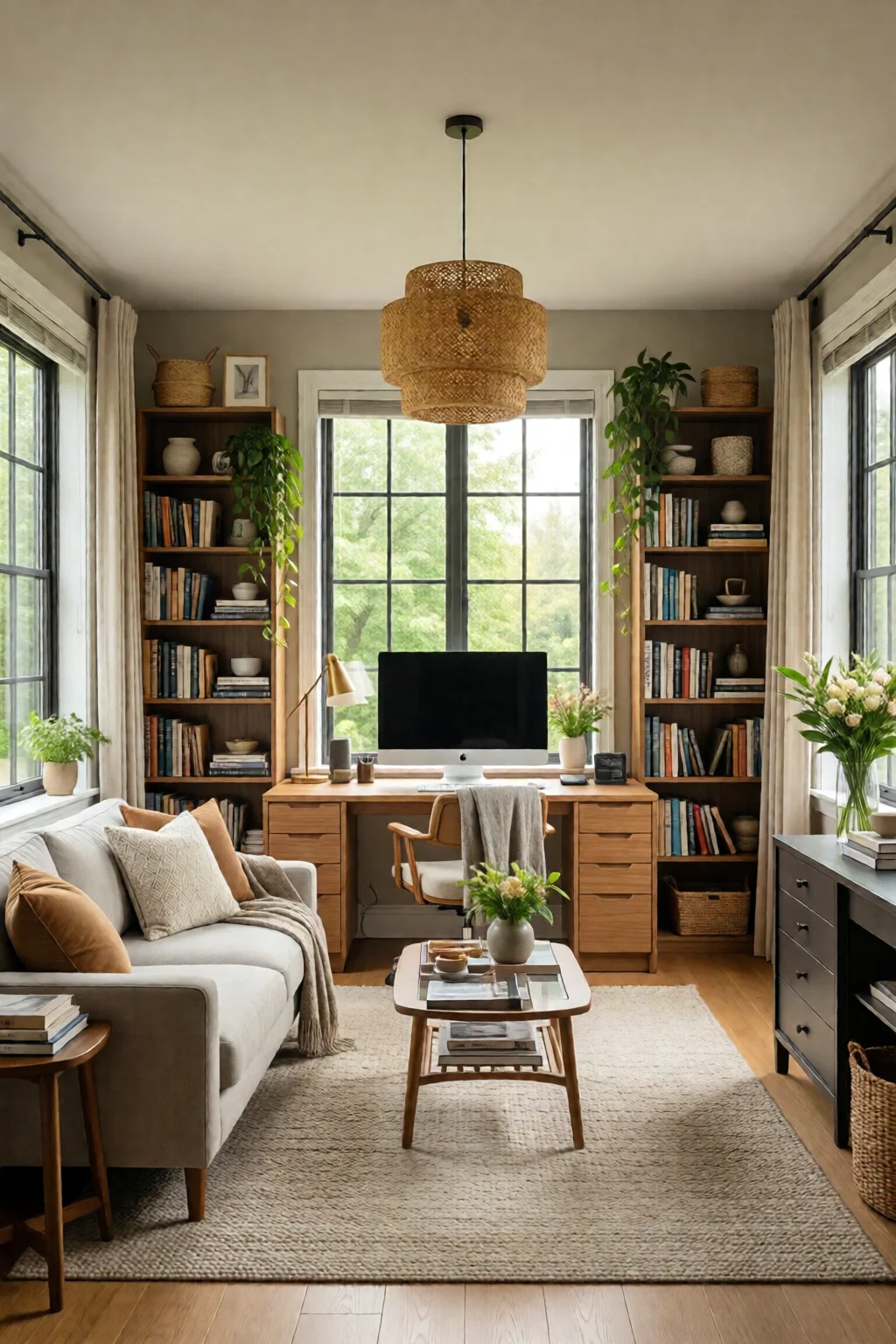
For larger rooms, break the space into zones with color. Paint the primary work zone in a soft green, the secondary reading nook in a muted blue, and keep the transition area neutral. This zoning reduces visual fatigue by giving the eye natural rest points.
Consider a two‑tone ceiling: a subtle off‑white beneath a 1‑ft band of pale sky blue. This draws the eye upward without creating a “caving in” effect.
Budget‑Friendly DIY Painting Tips
Prep and Tools
Good prep saves money. Use 3M Scotch‑Blue painter’s tape ($7 per roll) to protect trim. Clean walls with a solution of 1 part trisodium phosphate (TSP) to 10 parts water—costs about $5 for a 5‑lb container, enough for multiple rooms.
Invest in a quality roller—Wooster “Super/Fine” 9‑in. nap roller ($12) and a ½‑in. angled brush for edges. A 4‑in. paint tray liner ($1.50) reduces cleanup time by 30 %.
Painting Techniques
For a subtle texture, try rag‑rolling. After the first coat dries (usually 2‑3 hours for latex), dip a clean rag in a small amount of paint and roll it over the wall. The effect adds depth without changing the hue, keeping the calm vibe intact.
When using dark accent walls, apply a “cut‑in” technique: paint a 2‑in. border around the ceiling and trim before filling the large area. This prevents “paint bleed” and gives crisp lines, essential for a professional look.
Comparison Table: Popular Paint Brands & Their Calm‑Focus Shades
| Brand | Shade (Calm Focus) | Price per Gallon | LRV (Light Reflectance Value) | Recommended Room Size | Finish |
|---|---|---|---|---|---|
| Benjamin Moore | Palladian Blue (HC‑172) | $58 | 71 | Up to 250 sq ft per coat | Matte |
| Sherwin‑Williams | Sea Salt (SW 6211) | $65 | 69 | Ideal for 200‑300 sq ft | Eggshell |
| Farrow & Ball | Ammonite (No. 274) | $79 | 86 | Best for bright rooms, up to 300 sq ft | Satin |
| Valspar | Gentle Touch (SW 7036) | $38 | 58 | Versatile, 150‑250 sq ft | Low‑Sheen |
| Behr | Silver Drop (790C‑2) | $32 | 58 | Small spaces, 100‑180 sq ft | Flat |
Choosing a paint isn’t just about hue; consider Light Reflectance Value (LRV) to gauge how much natural light the color will return. Higher LRV (above 70) works well in darker rooms, while lower LRV (50‑60) adds coziness to bright spaces.
Pro Tips from Our Experience
- Test with a full‑day observation. Paint a 12‑in. patch and live in the room for 24 hours before committing. Notice any shifts in mood when you transition from video calls to deep work.
- Combine paint with wall‑covering accents. A subtle, woven wallpaper strip (e.g., Graham & Brown “Linen”, $45 per roll) behind your monitor adds texture without color overload.
- Mind the ceiling. A ceiling 2‑3 % lighter than the walls reduces perceived height, fostering a grounded feeling—essential for focus.
- Use a humidifier. In dry climates, a 1.5‑gallon humidifier (Levoit LV600HH, $99) maintains optimal indoor humidity (40‑55 %), which enhances paint finish durability and reduces eye strain.
- Synchronize color with workflow. Reserve cooler blues for analytical tasks (budgeting, coding) and warmer greens for creative brainstorming sessions.
FAQ
What paint finish is best for a calm home office?
A low‑sheen or matte finish reduces glare, which helps keep eyes relaxed. Satin can be used on accent walls for a subtle shine, but avoid high‑gloss finishes that reflect too much light.
Can I mix calming colors with a bold accent?
Yes. Use a calm base (soft blue, green, or greige) on three walls and apply a single bold accent wall or furniture piece. This creates visual interest while maintaining overall tranquility.
How many gallons of paint do I need for a 12 × 15‑ft office?
A standard 1‑gal can covers ~350 sq ft with one coat. For a 12 × 15‑ft room (ceiling height 8 ft), you have ~480 sq ft of wall area. Two coats require roughly 2.8 gallons, so purchase three 1‑gal cans to allow for touch‑ups.
Do I need special lighting for these color schemes?
Pair calming wall colors with a mix of ambient and task lighting. For examples, see our home office lighting ideas task light. A 4000 K LED panel (around $120) provides neutral white light that compliments cool hues.
Conclusion: Your Calm, Focused Workspace Awaits
By selecting a soothing base palette, strategically adding accent colors, and using the right finishes and lighting, you can create a home office that truly supports focus and calm. Start with a small test patch, choose a reputable paint brand from the comparison table, and follow the prep steps to ensure a professional result. Within a weekend, you’ll have a space that not only looks beautiful but also boosts productivity—exactly the outcome of effective home office color ideas focus calm planning.
Take the first step today: pick your neutral foundation, order a sample of “Sea Salt” or “Palladian Blue,” and schedule a two‑hour painting session. Your future self will thank you for the extra clarity and reduced stress.