When I refreshed the living room of a downtown loft last winter, the biggest surprise wasn’t the new sofa or the bold rug—it was how dramatically the right lighting transformed the whole space. A single, well‑placed pendant turned a dull corner into a conversation hub, while layered floor lamps made the room feel twice as large. If you’ve been scrolling through endless Pinterest boards for living room lighting ideas and fixtures, you’re probably wondering how to move from “pretty pictures” to a plan that works for your ceiling height, budget, and style. Below is a step‑by‑step guide that takes the guesswork out of the equation, complete with product specifics, cost breakdowns, and the pitfalls I see homeowners make.
In This Article
Lighting is more than illumination; it’s a design tool that sets mood, highlights architecture, and even influences how you use the space. Whether you’re curating a cozy movie‑night nook or a bright reading corner, the right mix of fixtures will make every square foot feel intentional. Let’s dive into the most effective living room lighting ideas and fixtures, organized by function, style, and technology, so you can walk away with a concrete plan you can start this weekend.
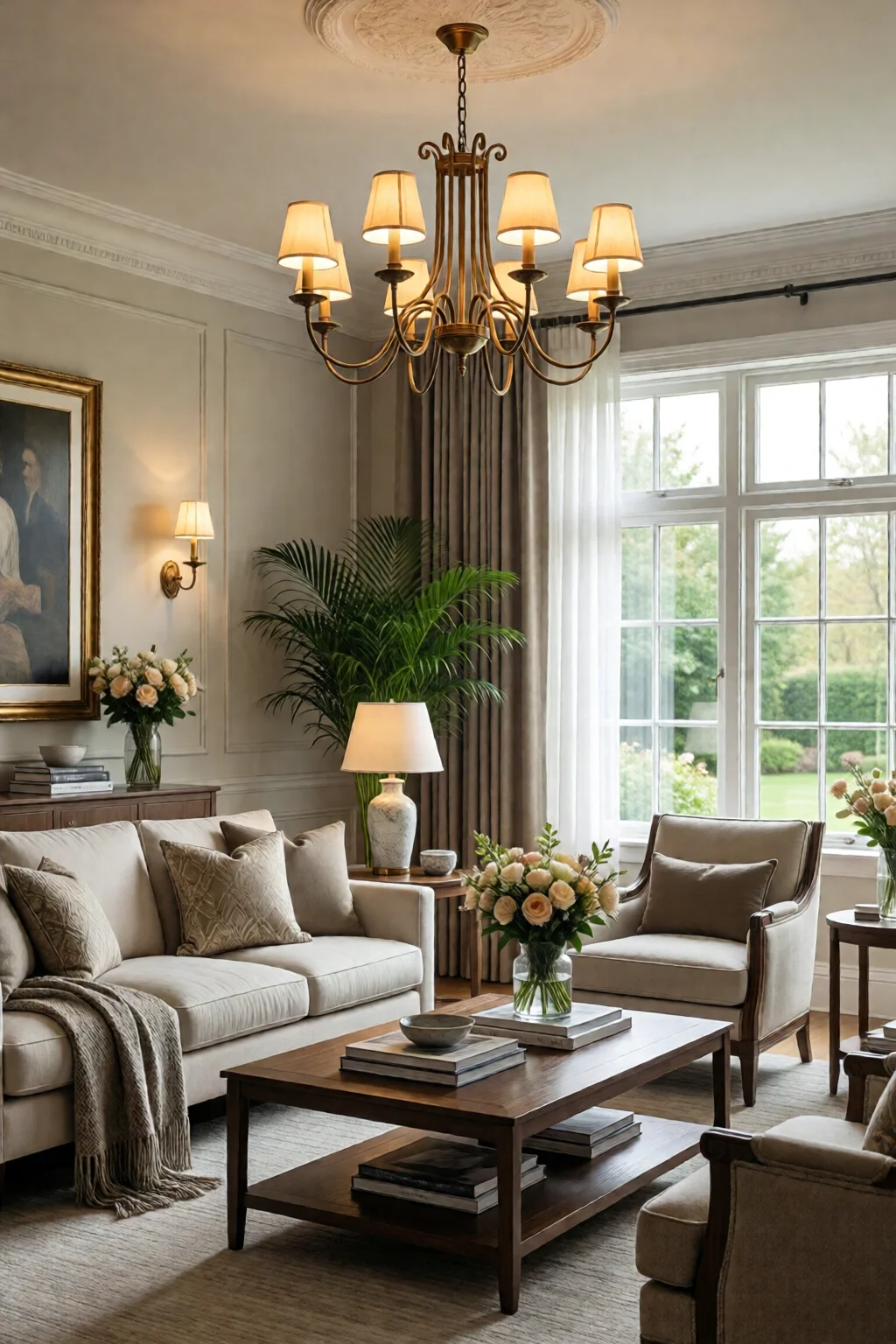
1. Layer Your Light: Ambient, Task, and Accent
Ambient Lighting Fundamentals
The ambient layer is the base layer—think of it as the room’s “daylight.” A good rule of thumb is to aim for 1,500–2,000 lumens per 100 sq ft in a living room that doubles as a family gathering space. For a 250‑sq‑ft room, that translates to roughly 3,750–5,000 lumens total.
My go‑to solution is a 4‑light semi‑flush ceiling fixture from West Elm (model Mid‑Century Linear, 24‑in. length, $399). Each bulb is a 60‑Watt-equivalent LED (800 lm), delivering 3,200 lm total—just shy of the top end, but the added floor lamps fill the gap.
Task Lighting for Living Rooms
Task lighting addresses specific activities: reading, knitting, or working on a laptop. A 1‑2‑foot adjustable floor lamp with a dimmable 12‑W LED (1,200 lm) can replace a table lamp and free up surface space.
One model I love is the IKEA Ranarp floor lamp (height 62 in., price $69). Pair it with a Philips Hue White Ambiance bulb for a color‑temperature range of 2,700–6,500 K, perfect for night‑time reading or bright afternoon work.
Accent Lighting to Highlight Features
Accent lights add drama. Use them to showcase artwork, a textured wall, or a bookshelf. LED strip lights hidden behind a floating shelf can create a “glow‑up” effect without visible wiring.
For a subtle yet powerful accent, install Lutron Caséta wireless LED uplights (2 W, 200 lm each) behind the top edge of a living room shelving display. The system costs about $45 per light plus a $79 dimmer switch, but the ability to control them via an app or voice assistant pays off in ambiance.
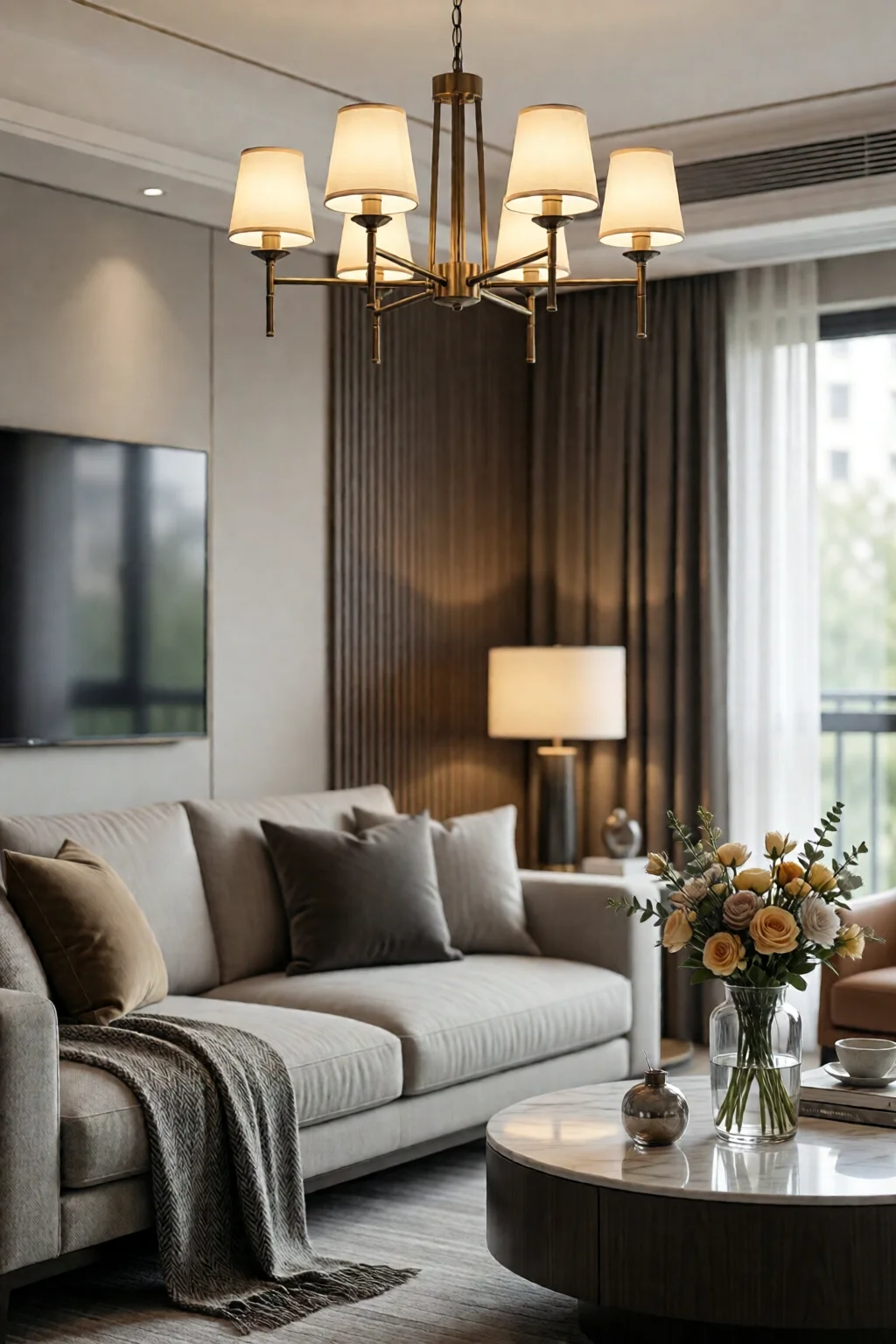
2. Choosing Fixtures: Styles, Brands, and Budgets
Modern Minimalist Fixtures
If your aesthetic leans toward clean lines, consider the Artemide Tolomeo Mega pendant (diameter 22 in., price $749). It uses a single E27 LED bulb (up to 1,600 lm) and offers a sleek brushed‑aluminum finish that works with both warm and cool tones.
Pair it with Philips Hue White and Color Ambiance bulbs ($30 each) for 16 million color options. The total cost sits around $820, but you gain a future‑proof fixture that integrates with any smart home ecosystem.
Classic & Transitional Pieces
For homes with a more traditional vibe, the Restoration Hardware “Industrial Chandelier” (36‑in. height, 5 lights, $1,095) brings a timeless, hand‑blown glass aesthetic. Each globe accepts a 60‑Watt‑equivalent LED, delivering up to 5,000 lm total.
Because the glass diffuses light beautifully, you can use lower‑output bulbs (e.g., 40‑Watt equivalents) to keep the ambiance warm and avoid glare over a dining area or TV wall. I’ve installed this in a farmhouse‑style living room and the result feels both grand and inviting.
Budget‑Friendly Picks
When the budget is tight, Target’s Project 62 line offers a 4‑light flush‑mount ceiling fixture (18 in., $89) that supports LED bulbs. Combine it with GE Refresh 60‑Watt‑equivalent LED bulbs (9.5 W, 800 lm, $5 each) for a total under $120.
Even on a shoestring, you can create visual interest by mixing in a Herman Miller floor lamp ($149) and a couple of Globe Electric table lamps ($45 each). The key is to balance cost with quality so the lights last at least 10 years.
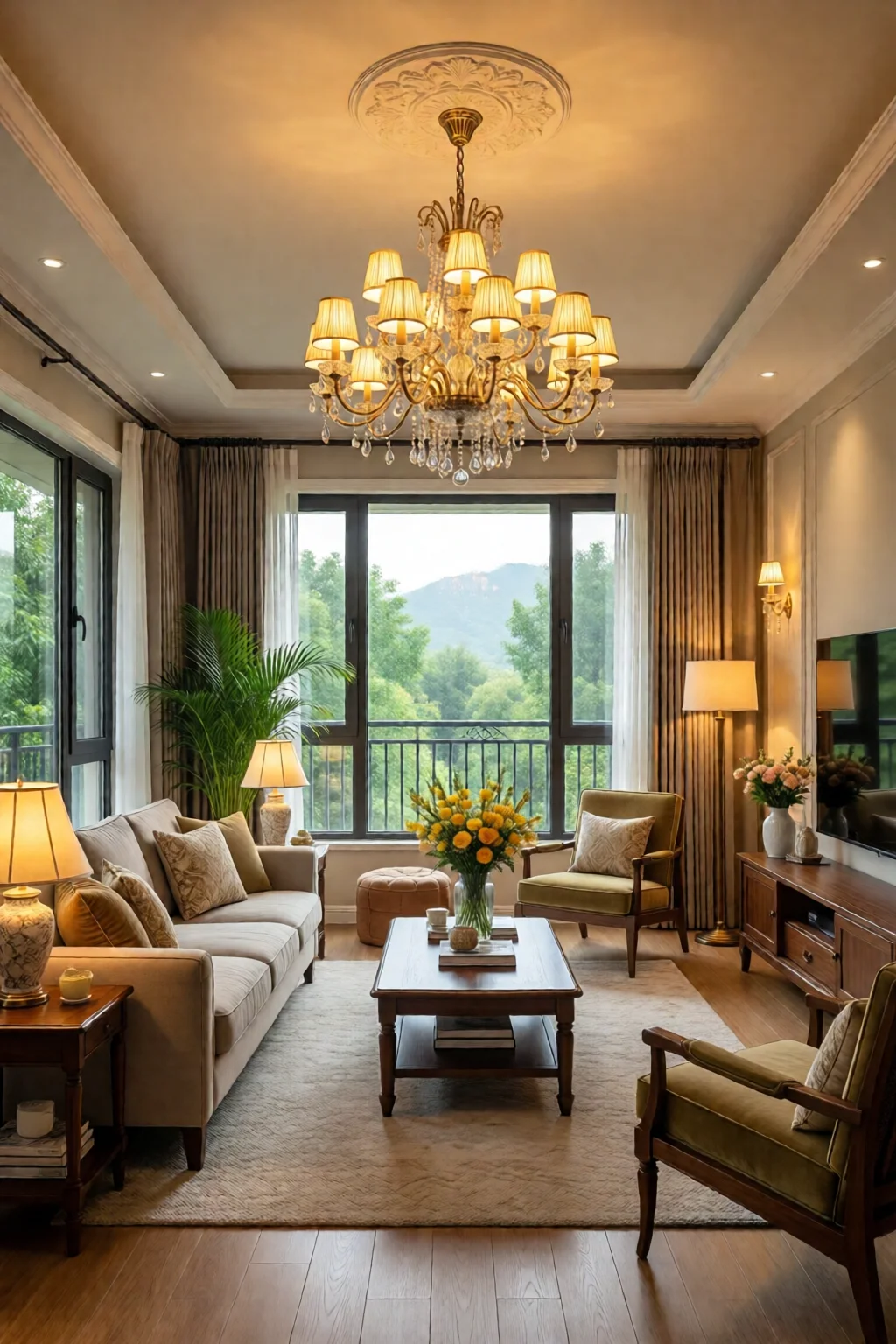
3. Room Size & Ceiling Height: Tailoring Fixtures to Space
Small Spaces: Tricks to Appear Larger
In a compact living room (under 150 sq ft), bulky chandeliers can overwhelm. Opt for recessed can lights: a 4‑inch LED can (e.g., Halo H5, $35 each) provides 800 lm per fixture. Install 4–6 of them on a 12‑ft ceiling for an even, glare‑free glow.
Complement the recessed lights with a slim, wall‑mounted swing arm lamp (West Elm “Sculpted Wall Lamp,” 18 in. arm, $199) to free up floor space while adding directional light for reading.
High Ceilings: Making a Statement
Rooms with 10‑ft+ ceilings deserve vertical interest. A multi‑tiered chandelier like the Crate & Barrel “Celeste” (34‑in. diameter, $1,250) drops just enough to create a focal point without drowning the space.
To keep energy costs down, choose a fixture that houses LED modules (e.g., Philips Hue White Ambiance integrated). Even at $1,300, the fixture’s lifespan of 25,000 hours means you’ll replace bulbs only once every 3–4 years.
Mid‑Size Rooms: Balanced Approach
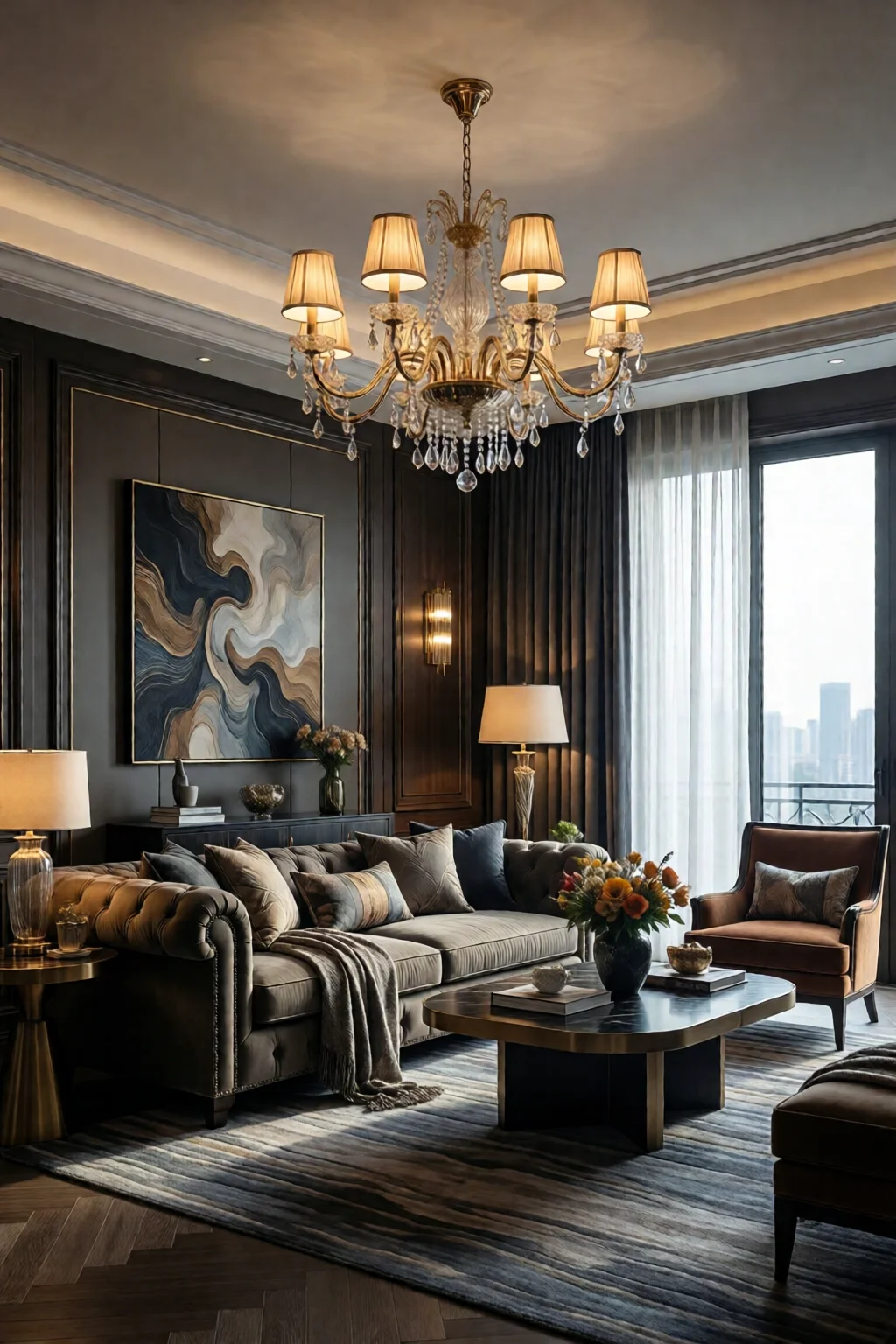
For a typical 250‑sq‑ft living room with an 8‑ft ceiling, a combination works best: a semi‑flush ceiling fixture (like the West Elm model mentioned earlier) plus two floor lamps and a pair of accent uplights. This layered approach distributes light evenly and avoids “dark spots.”
One mistake I see often is relying on a single chandelier for all lighting. The result is either too bright in the center and dim on the edges, or a glare that hurts the eyes when watching TV.
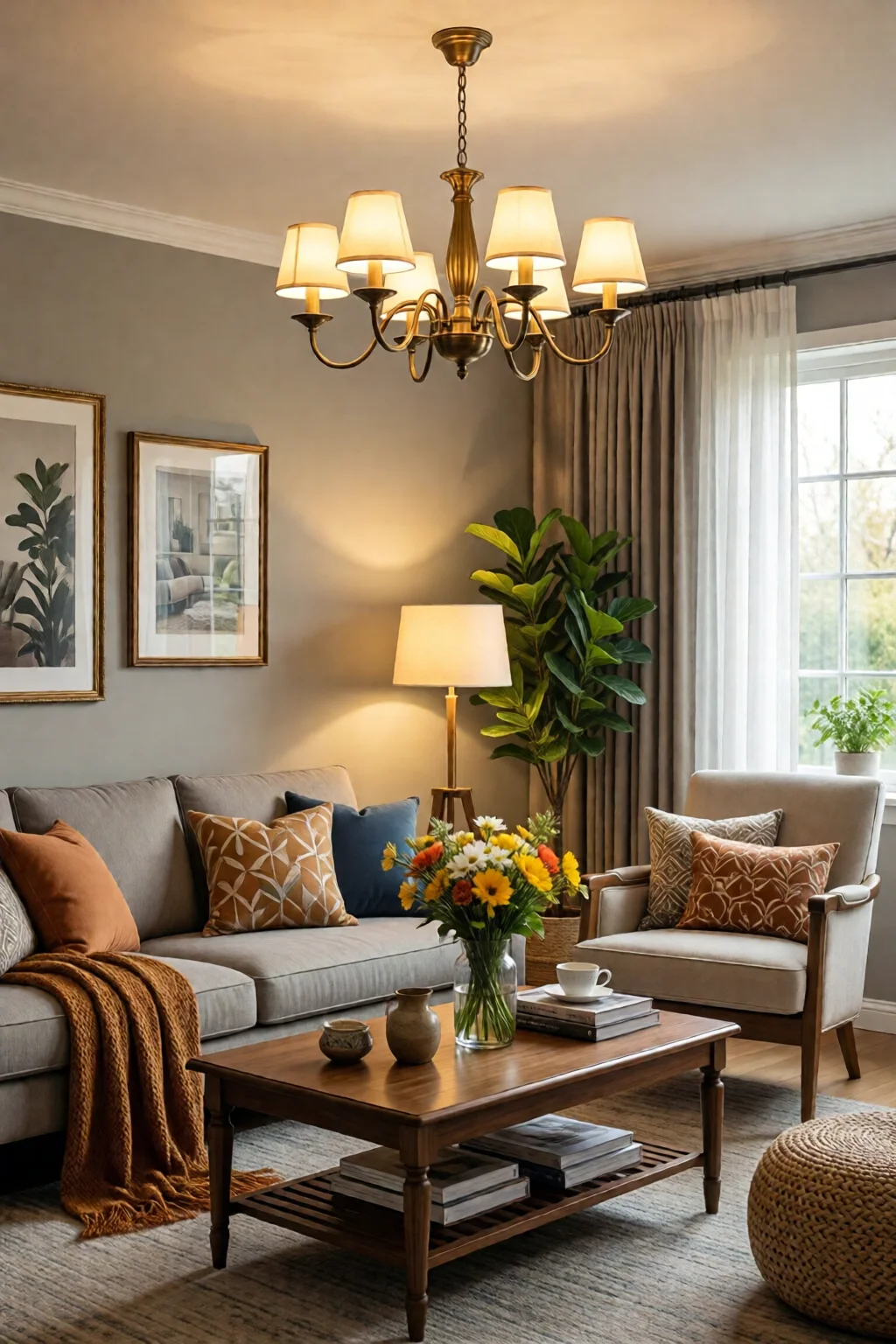
4. Smart & Sustainable Options
LED vs. Traditional Bulbs
LEDs use about 80 % less energy than incandescent bulbs. A 10‑W LED can replace a 60‑W incandescent while delivering the same 800 lm. Over a year, a 10‑W LED on a 3‑hour nightly schedule saves roughly 1,500 kWh, cutting your electric bill by $180 (average $0.12/kWh).
Smart Controls: Hue, Lutron, and More
Integrating smart controls lets you dim, schedule, and change color temperature without getting up. My favorite setup is a Lutron Caséta Wireless dimmer paired with Philips Hue bulbs. The dimmer costs $79, each Hue bulb $30, and the hub $59. Total for a 4‑lamp living room: $259.
Automation can reduce energy use by 15 %: schedule warm 2,700 K light for evenings, cooler 5,000 K for daytime reading, and turn off accent lights when no one is home.
Energy Savings Data
| Fixture Type | Wattage (per unit) | Annual Energy Use (kWh) | Estimated Cost/Year | Typical Lifespan (hrs) |
|---|---|---|---|---|
| Incandescent 60 W | 60 W | 525 | $63 | 1,000 |
| LED 10 W (800 lm) | 10 W | 88 | $11 | 25,000 |
| Smart LED 10 W (Hue) | 10 W | 88 | $11 + $5 (hub) | 25,000 |
Recyclable & Eco‑Friendly Materials
Look for fixtures made from reclaimed wood, bamboo, or recycled aluminum. The EcoSmart pendant (bamboo shade, 22 in., $129) uses 100 % recycled metal and is UL‑listed for LEDs only, ensuring low heat output.
5. DIY & Installation Tips
Wiring Basics for the Confident DIYer
If you’re comfortable with a screwdriver and a voltage tester, most ceiling fixtures can be installed in under an hour. Turn off the breaker, verify no voltage with a tester, connect black to black (hot), white to white (neutral), and green or bare copper to ground.
For pendant lights, ensure the ceiling box is rated for the fixture’s weight (usually 5 lb for most pendants). If you’re hanging a chandelier over 10 lb, upgrade to a “rated” box (e.g., Leviton 5‑in. metal box, $12).
Mixing Fixtures Safely
When combining recessed cans, pendant lights, and floor lamps, keep the total wattage under the circuit’s capacity (typically 15 A at 120 V = 1,800 W). A typical living room with four recessed cans (800 lm each, 10 W total) plus a 20‑W pendant and two 12‑W floor lamps stays well below 300 W, leaving ample headroom.
Use a dedicated dimmer for each lighting layer to avoid flicker. A Lutron Diva dimmer ($69) works with both LED and incandescent, giving you flexibility for future upgrades.
Hiring a Pro vs. DIY
If the project involves moving wiring, adding new circuits, or installing heavy fixtures above a fireplace, call a licensed electrician. The average cost for a simple pendant install is $150‑$250, while a full rewiring can run $1,200‑$2,500.
My rule of thumb: if you’re unsure about load capacity or the fixture exceeds 10 lb, budget for a pro. The peace of mind is worth the extra $100‑$200.
Pro Tips from Our Experience
- Start with the ceiling. Install ambient lighting first; it sets the baseline for all other layers.
- Use dimmers everywhere. A 0‑100 % dimmer lets you adapt the room for movie nights, parties, or quiet reading without swapping bulbs.
- Layer color temperature. Warm 2,700 K for relaxation, neutral 3,500 K for everyday use, and cool 5,000 K for tasks like reading or working.
- Don’t forget the walls. A single Globe Electric wall sconce (12 in., $48) placed opposite a sofa can reduce eye strain when watching TV.
- Plan for power. Add an extra outlet behind a floor lamp or beside a bookshelf; it prevents unsightly extension cords and future‑proofs the space.
By combining these strategies, you’ll end up with a living room that feels balanced, functional, and stylish—no matter whether you’re entertaining guests or curling up with a book.
Frequently Asked Questions
How many lumens do I need for a 300‑sq‑ft living room?
Aim for 1,500–2,000 lumens per 100 sq ft. For 300 sq ft, that’s roughly 4,500–6,000 lumens total, distributed across ambient, task, and accent layers.
Can I mix smart bulbs with non‑smart fixtures?
Yes. Smart bulbs can be placed in any standard E26/E27 socket. Just ensure the fixture can handle the bulb’s wattage (most LEDs are under 15 W).
What’s the best way to hide wiring for floor lamps?
Use a cord cover painted to match the wall or baseboard. Alternatively, run the cord through a decorative conduit that doubles as a design element, such as a reclaimed‑wood channel.
Do recessed lights work in low‑ceiling rooms?
Yes, but choose shallow (4‑in.) cans and space them 4‑6 ft apart. This prevents a “spotlight” effect and provides even illumination.
How much can I expect to save by switching to LED?
Switching a 60‑W incandescent to a 10‑W LED saves about 80 % on energy for that fixture. In a typical living room with five fixtures, annual savings range from $70 to $150, depending on usage.
Ready to light up your living room? Pick one ambient fixture, add a task lamp, sprinkle in a couple of accent uplights, and you’ll have a layered, functional space in no time. Happy lighting!
1 commentaire sur « Living Room Lighting Ideas And Fixtures – Everything You Need to Know »