Did you know that 73% of homeowners say the rug they chose completely transformed the feel of their living room? The right rug can anchor furniture, define zones, and inject personality—all without a major renovation. If you’ve typed “living room rug ideas size and style” into Google, you’re probably wrestling with two questions: how big should the rug be, and which look will complement your décor? Below is a step‑by‑step guide that blends precise measurements with style expertise, so you can pick a rug that looks intentional and feels right.
In This Article
In the next few sections we’ll walk through measuring your space, matching patterns and textures, placing rugs in various layouts, budgeting, and a handful of pro‑level tricks I’ve honed over a decade of interior design work. By the end you’ll have a shortlist of concrete options, a price breakdown, and a confidence boost that says, “I know exactly what I need.”
1. Determine the Right Rug Size for Your Living Room
Measure the Seating Area First
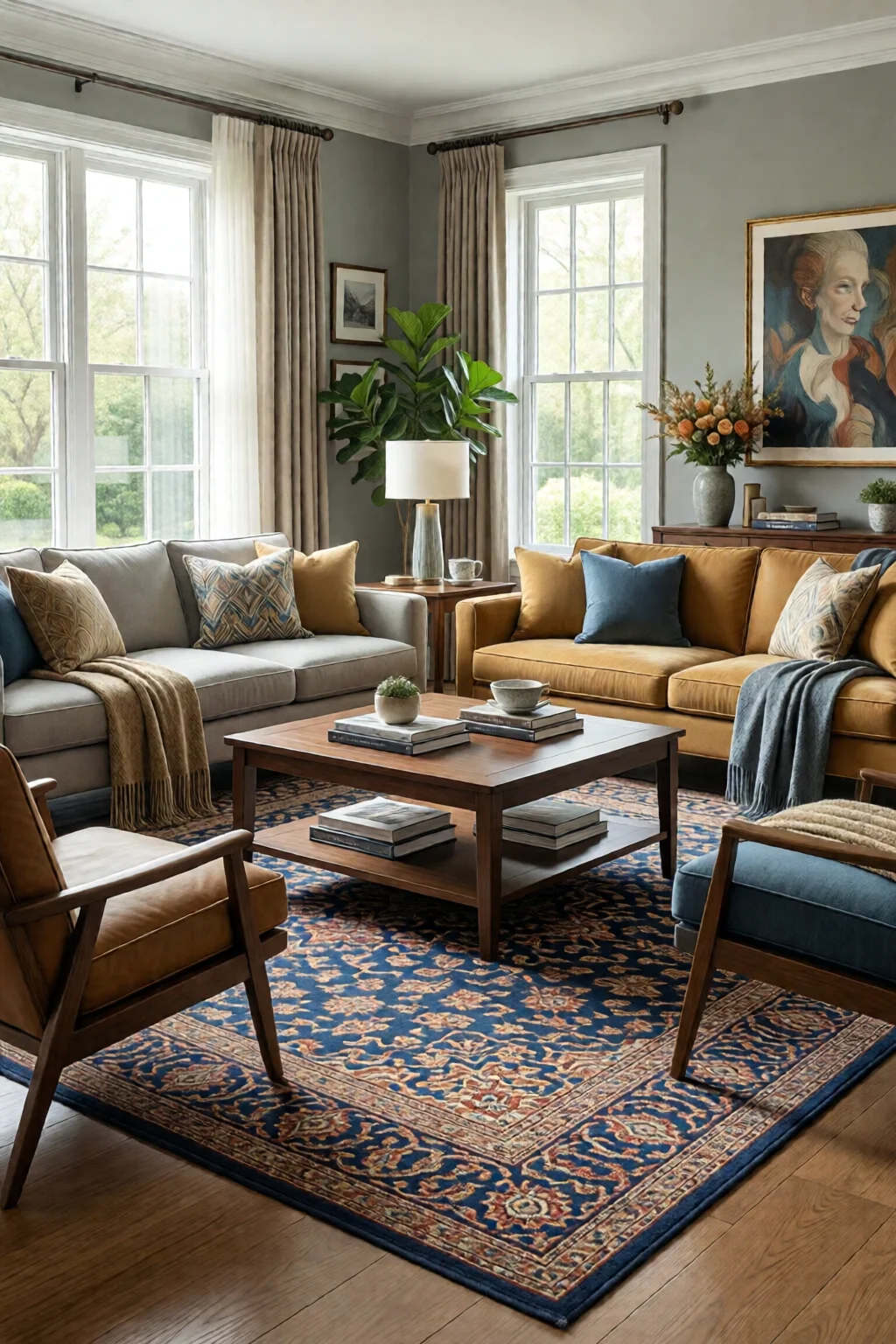
The most reliable method is to start with the furniture footprint, not the room’s overall dimensions. Measure the length of your sofa, loveseat, and armchairs, then add at least 24‑inches of exposed floor on each side. For a standard three‑piece sofa (84” × 38”) with a coffee table centered, a 9 × 12‑foot rug (108” × 144”) typically provides the ideal border.
Common Size Formulas
- One‑piece seating (loveseat + chair): Choose a rug that is 6 × 9 ft. This size lets the front legs of each piece sit on the rug while the back legs stay on the floor.
- Two‑piece seating (sofa + loveseat): Aim for an 8 × 10 ft rug. It creates a cohesive base without overwhelming the space.
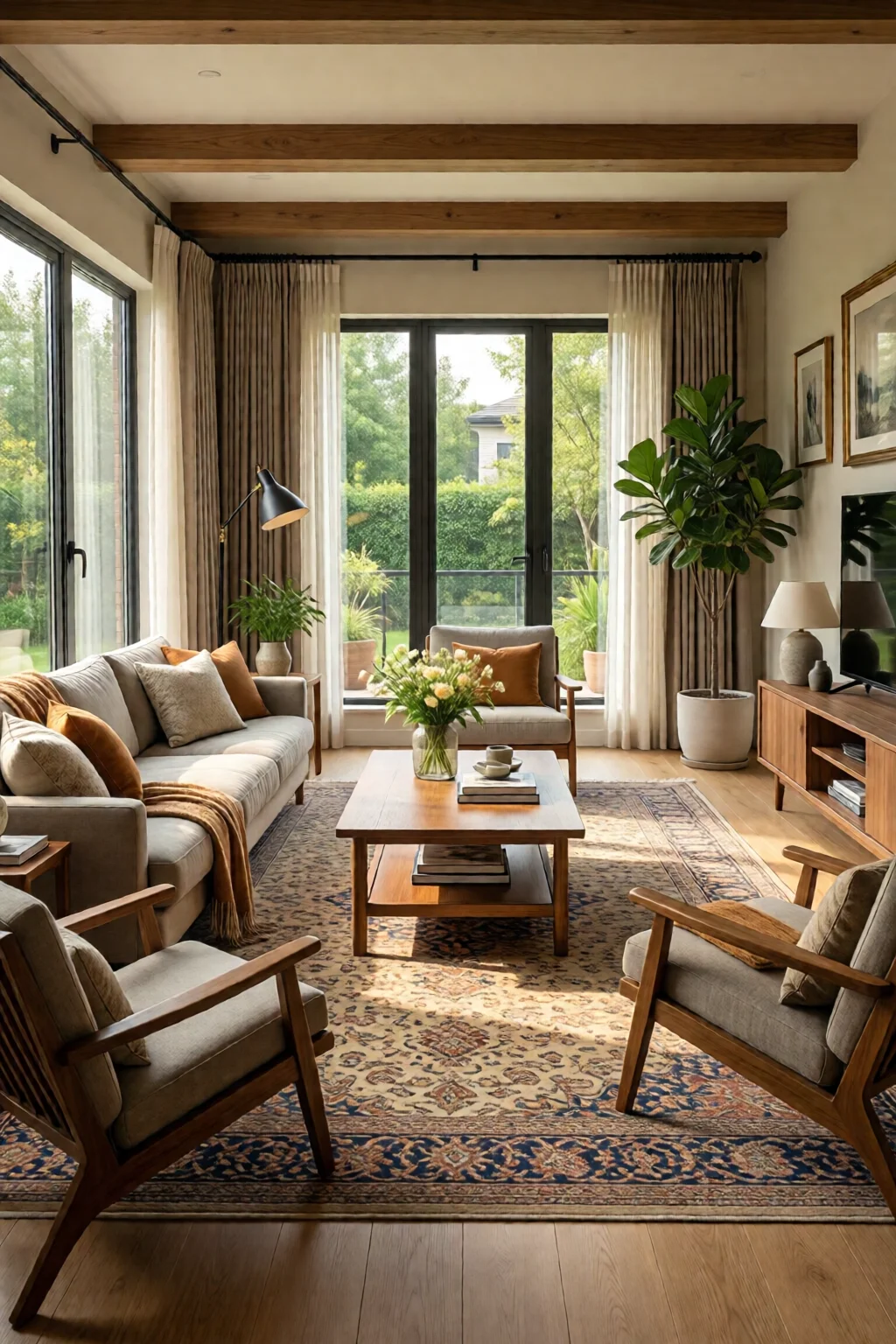
- Three‑piece seating (sofa + two chairs): Go for a 9 × 12 ft rug. This provides a generous border and frames the coffee table nicely.
When to Go Oversized
If you love a “floating” look where all furniture sits on the rug, add 48 inches to the total seating width. An 11 × 14‑foot rug can work beautifully in a large, open‑plan living room with a sectional and a pair of side tables. Oversized rugs also help soften high‑traffic zones and protect hardwood from wear.
2. Style Matching: From Modern Minimalist to Cozy Traditional
Trend‑Driven Patterns
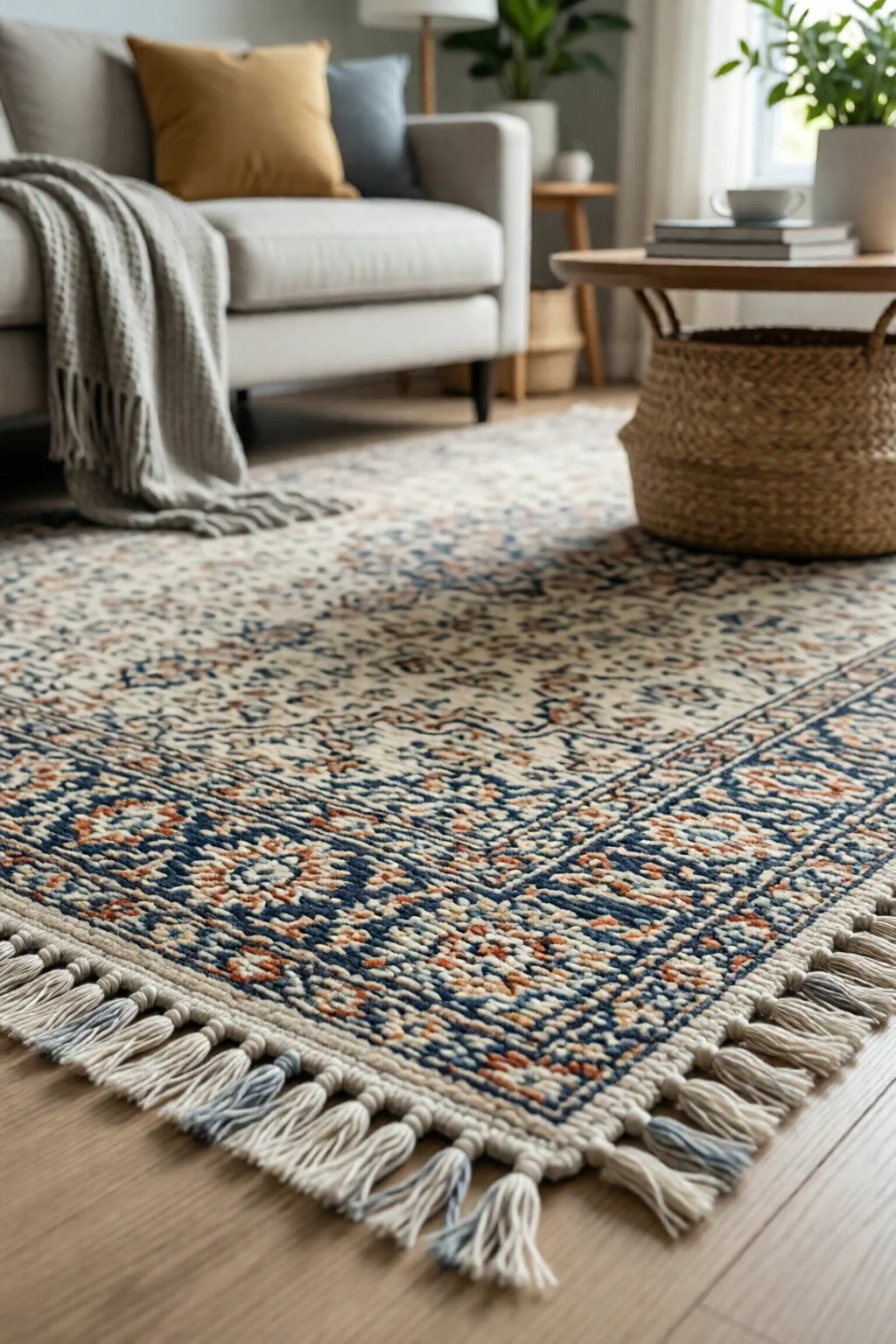
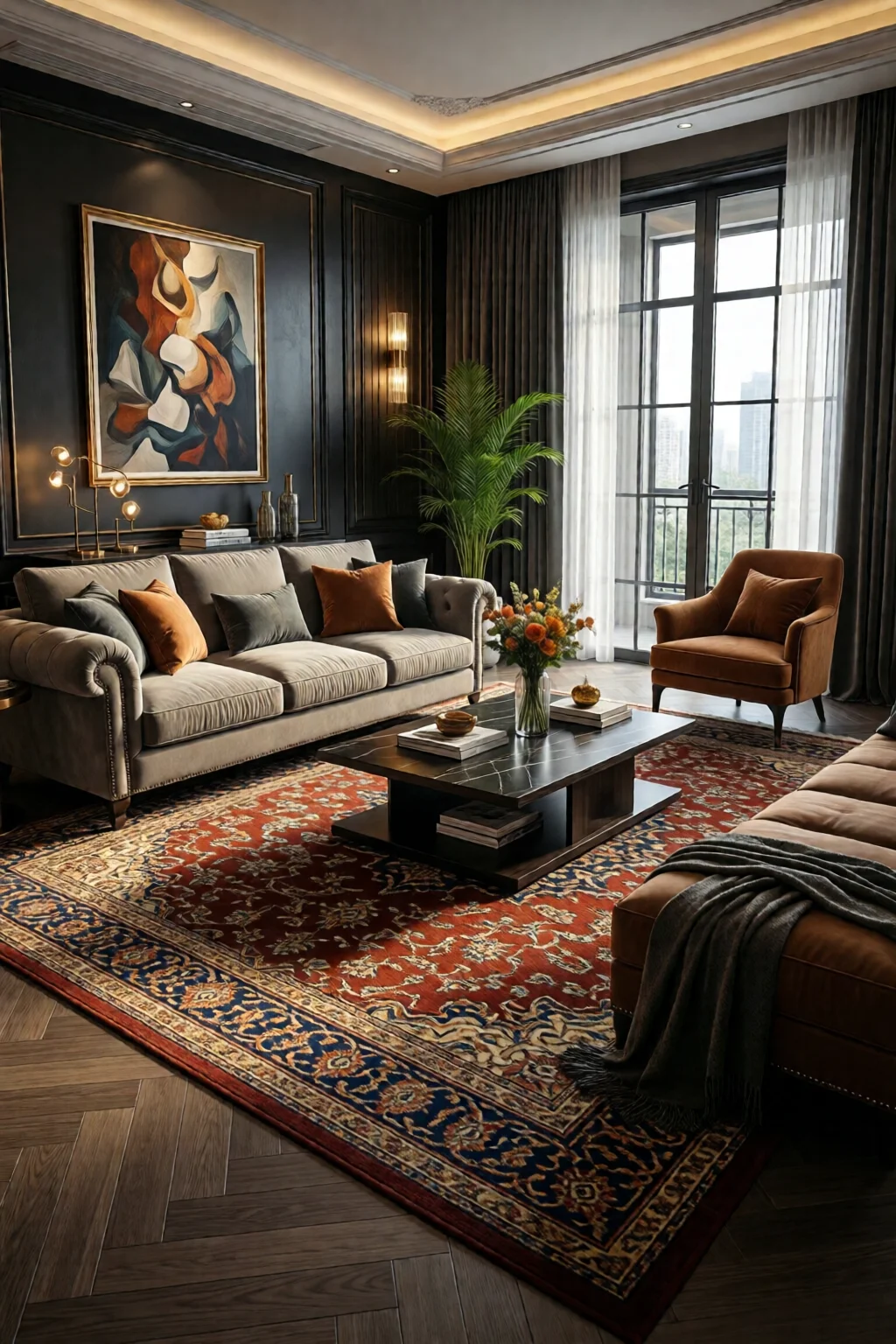
Geometric chevrons and oversized ikat prints dominate the modern market. The West Elm “Scale Chevron” rug, 8 × 10 ft, retails for $429 and pairs well with a charcoal sofa and brass accents. For a classic vibe, Persian‑style rugs like the Safavieh “Marrakesh” 9 × 12 ft at $699 bring intricate detail without feeling dated.
Material Choices
- Wool: Naturally flame‑retardant, durable, and soft underfoot. Expect $12‑$25 per sq ft. Example: Ruggable “Wool Blend” 9 × 12 ft at $599.
- Cotton: Budget‑friendly, easy to clean, but less resilient. $5‑$10 per sq ft. IKEA “LOHALS” flatweave, 5 × 8 ft, $149.
- Jute & Seagrass: Great for coastal or boho themes, adds texture. $8‑$15 per sq ft. World Market “Seagrass” 6 × 9 ft at $219.
Color Coordination
Use the 60‑30‑10 rule: 60% dominant neutral (walls/floor), 30% secondary color (sofa), 10% accent (rug). If your sofa is a muted sage, a rug with a 10% pop of coral can energize the room without clashing. When your palette is already bold, choose a rug with a muted background and subtle pattern to avoid visual overload.
3. Room Layouts and Rug Placement Strategies
Open‑Plan Living Spaces
Define zones by using rugs as visual dividers. In a combined kitchen‑living area, a 6 × 9 ft rug under the dining table and a 9 × 12 ft rug under the sofa create two distinct areas. Align the rug edges with the backs of chairs for a seamless flow.
Small Living Rooms
In tight quarters, a 5 × 8 ft rug can make the room feel larger if you leave a 12‑inch border of floor exposed. Light‑colored rugs reflect more light, opening up the space. Avoid patterns that are too busy; a subtle herringbone in a soft gray works well.
Multi‑Zone Rooms
If you have a reading nook beside the main seating, consider a small 4 × 6 ft accent rug under the armchair. Pair it with a floor lamp and a side table for a cozy corner that feels intentional.
4. Budgeting and Buying Tips
Price Ranges per Square Foot
| Material | Price per sq ft | Typical Size | Best For |
|---|---|---|---|
| Wool (hand‑woven) | $20‑$35 | 8 × 10 ft | High‑traffic living rooms |
| Cotton (machine‑made) | $6‑$12 | 5 × 8 ft | Budget‑friendly updates |
| Jute/Seagrass | $10‑$18 | 6 × 9 ft | Coastal or boho aesthetics |
| Synthetic (polypropylene) | $4‑$8 | 9 × 12 ft | Pet‑friendly homes |
Brand Recommendations
- West Elm – stylish, mid‑range; Scale Chevron 8 × 10 ft $429.
- IKEA – budget; LOHALS flatweave 5 × 8 ft $149.
- Safavieh – classic designs; Marrakesh 9 × 12 ft $699.
- Ruggable – washable; Wool Blend 9 × 12 ft $599.
When to Splurge vs. DIY
If the rug sits under a heavy sofa or in a high‑traffic family room, invest in a high‑quality wool piece; its durability can offset a $2,000 price tag over a decade. For decorative accent rugs in low‑traffic zones, a DIY flat‑weave using a DIY wall art kit turned sideways can be a fun weekend project and cost under $100.
5. Pro Tips from Our Experience
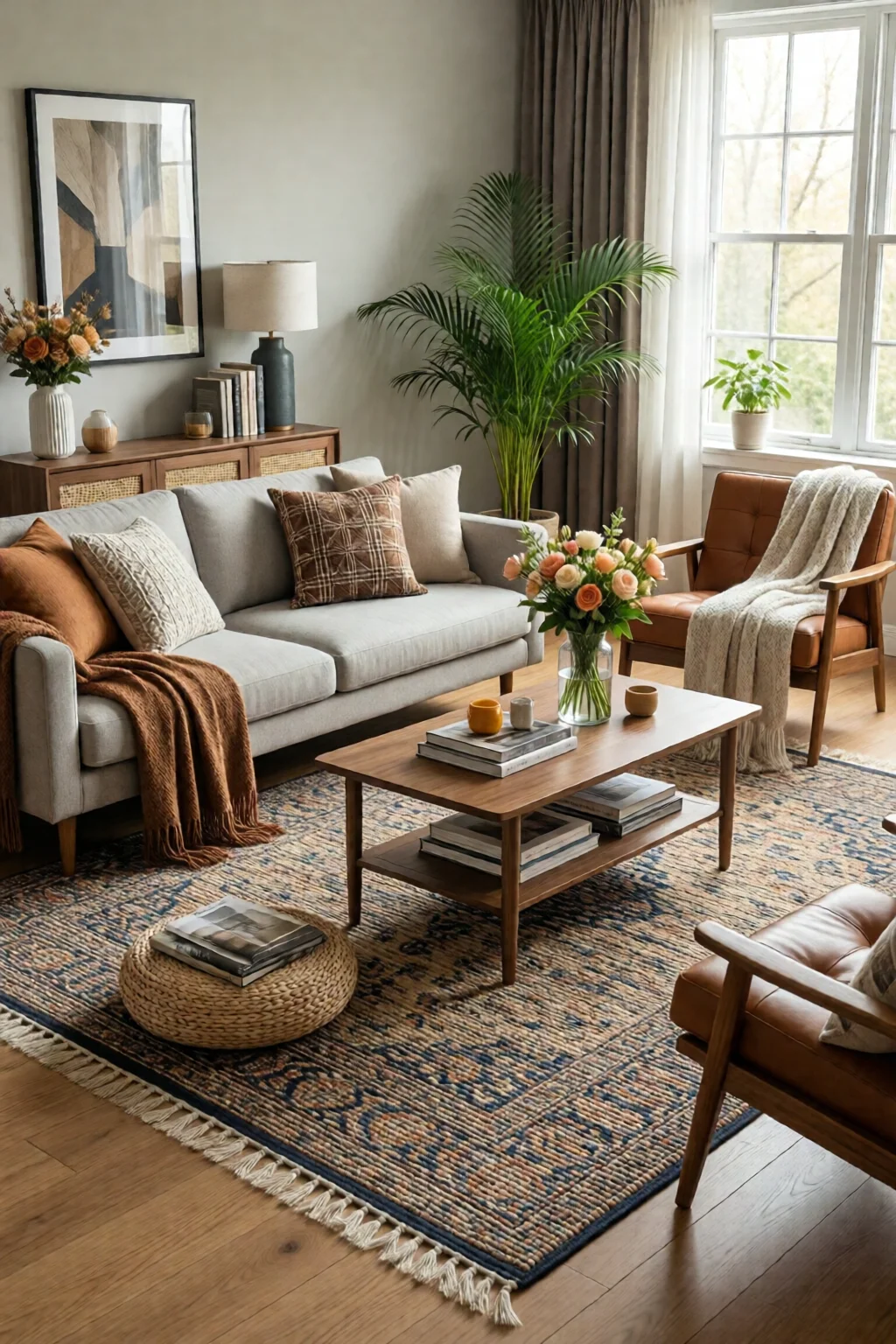
- Layer for depth. Place a 3 × 5 ft runner in front of a larger 8 × 10 ft rug to add visual interest and protect high‑wear zones.
- Rotate regularly. Rotating a rug 180° every six months prevents uneven wear, especially on synthetic fibers.
- Test with tape. Lay painter’s tape on the floor in the exact rug dimensions. Stand back and assess the visual balance before purchasing.
- Mind the furniture legs. For a “floating” effect, ensure at least the front legs of each piece rest on the rug; back legs can stay on the floor to keep the room feeling airy.
- Use a rug pad. A high‑density pad adds 30‑40% more lifespan and prevents slipping. Gorilla Grip pad for 9 × 12 ft costs $79.
6. Frequently Asked Questions
What rug size works best with a sectional sofa?
Place the sectional on a rug that extends at least 24‑inches beyond the front legs of each chaise. For a typical L‑sectional (96” × 84”), a 10 × 14‑ft rug offers balanced coverage while keeping the back legs on the floor for an open feel.
Can I mix rug styles in the same living room?
Yes, but keep a unifying element—color, material, or pattern scale. Pair a neutral jute base rug with a smaller, bold‑patterned accent rug under a chair to create contrast without chaos.
How do I clean a wool rug without damaging it?
Vacuum weekly with a gentle suction setting. Spot‑clean spills with a mixture of cold water and a few drops of mild detergent, blotting—not rubbing. For deep cleaning, hire a professional that uses low‑pH solutions.
Is a rug pad really necessary?
A rug pad protects flooring, extends rug life, and prevents slipping. For hardwood, a felt pad with rubber backing adds cushioning and stability, costing $50‑$120 depending on size.
Where can I find affordable yet stylish rugs?
Check outlet sections of West Elm and IKEA, or browse online sales at Ruggable and Wayfair. Seasonal clearances often feature 30‑40% discounts on high‑quality pieces.
Conclusion: Your Next Step
Choosing the perfect rug is part math, part mood board. Start by measuring the seating footprint, then match a size that frames your furniture with at least a 24‑inch border. Pick a style—geometric, Persian, or natural fiber—that aligns with your overall décor, and stay within a realistic budget by comparing materials and brands. Finally, apply the pro tips above: use a rug pad, rotate regularly, and test dimensions with tape before you buy.
Armed with these concrete guidelines, you can walk into any showroom—or scroll online—with confidence, knowing exactly which size and style will elevate your living room. Happy rug hunting!
1 commentaire sur « Living Room Rug Ideas Size And Style: Complete Guide for 2026 »