When my sister moved into a 2,200‑square‑foot loft in Brooklyn, the first thing she asked me was how to make the cavernous space feel cozy without chopping down the open‑concept layout. She’d heard the term “open concept living room decorating” tossed around on Instagram, but the advice she found was either too generic or wildly expensive. After a weekend of trial‑and‑error—painting a single accent wall, swapping a dated sofa for a modular sectional, and layering a 12‑by‑15‑foot rug—we landed on a plan that balanced style, function, and a budget that didn’t require a second mortgage. If you’re standing in a similar space, staring at bare walls and wondering where to start, this guide is your roadmap.
In This Article
- 1. Defining Zones Without Walls
- 2. Choosing the Right Flooring
- 3. Lighting Strategies for Depth and Drama
- 4. Color Palette and Wall Treatments
- 5. Furniture Selection and Layout Tips
- Pro Tips from Our Experience
- Comparison of Popular Flooring Options
- Frequently Asked Questions
- Conclusion: Your Next Steps
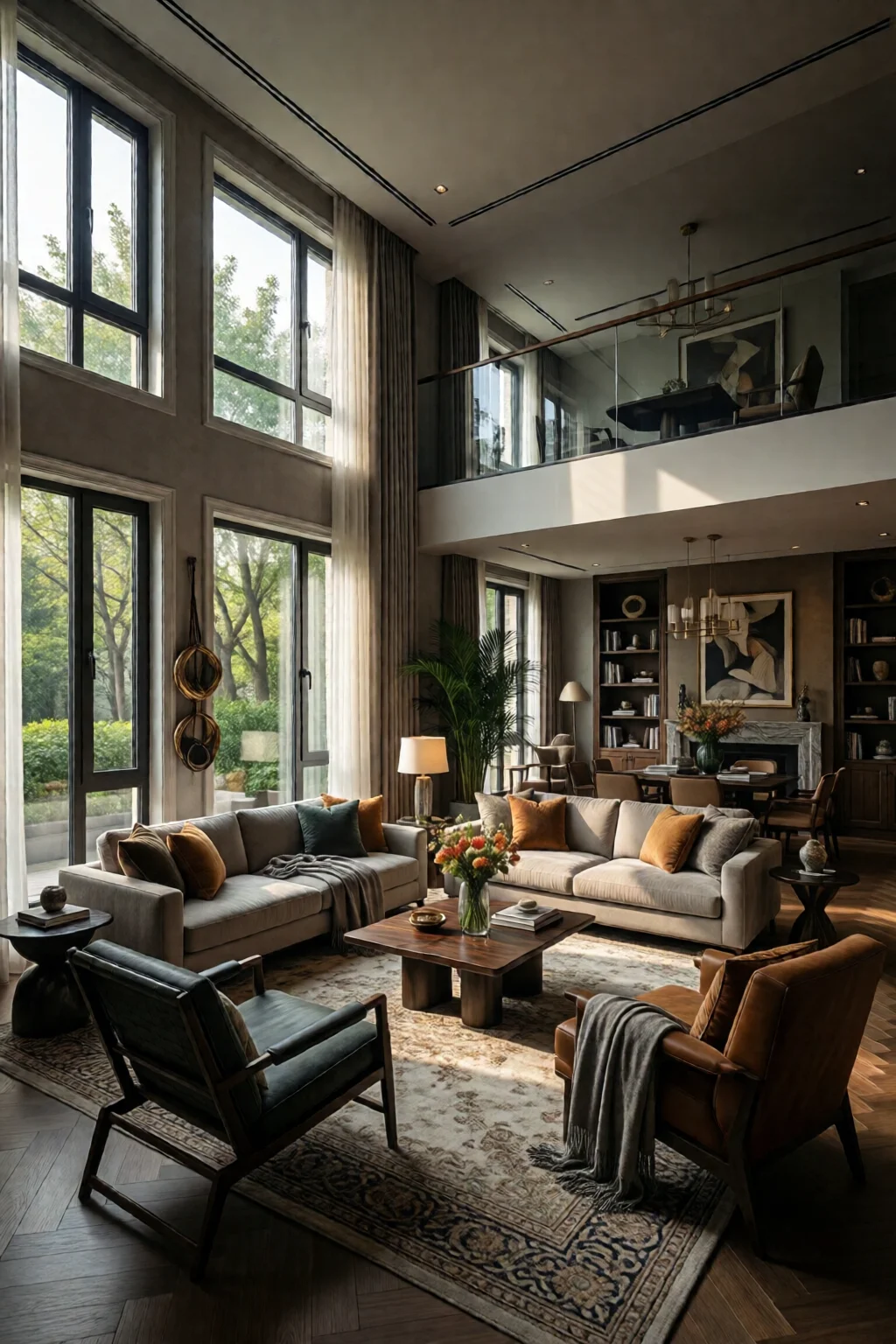
Open‑concept living rooms are a blessing and a challenge. The large footprint gives you room to experiment, yet the lack of defined boundaries can make it feel like a giant, empty box. The key is to create visual anchors, zones, and flow without sacrificing the airy feel that makes open plans so desirable. Below, I break down every decision point—from floor to ceiling—so you can move from “I have a big space” to “I have a beautifully curated home” with confidence.
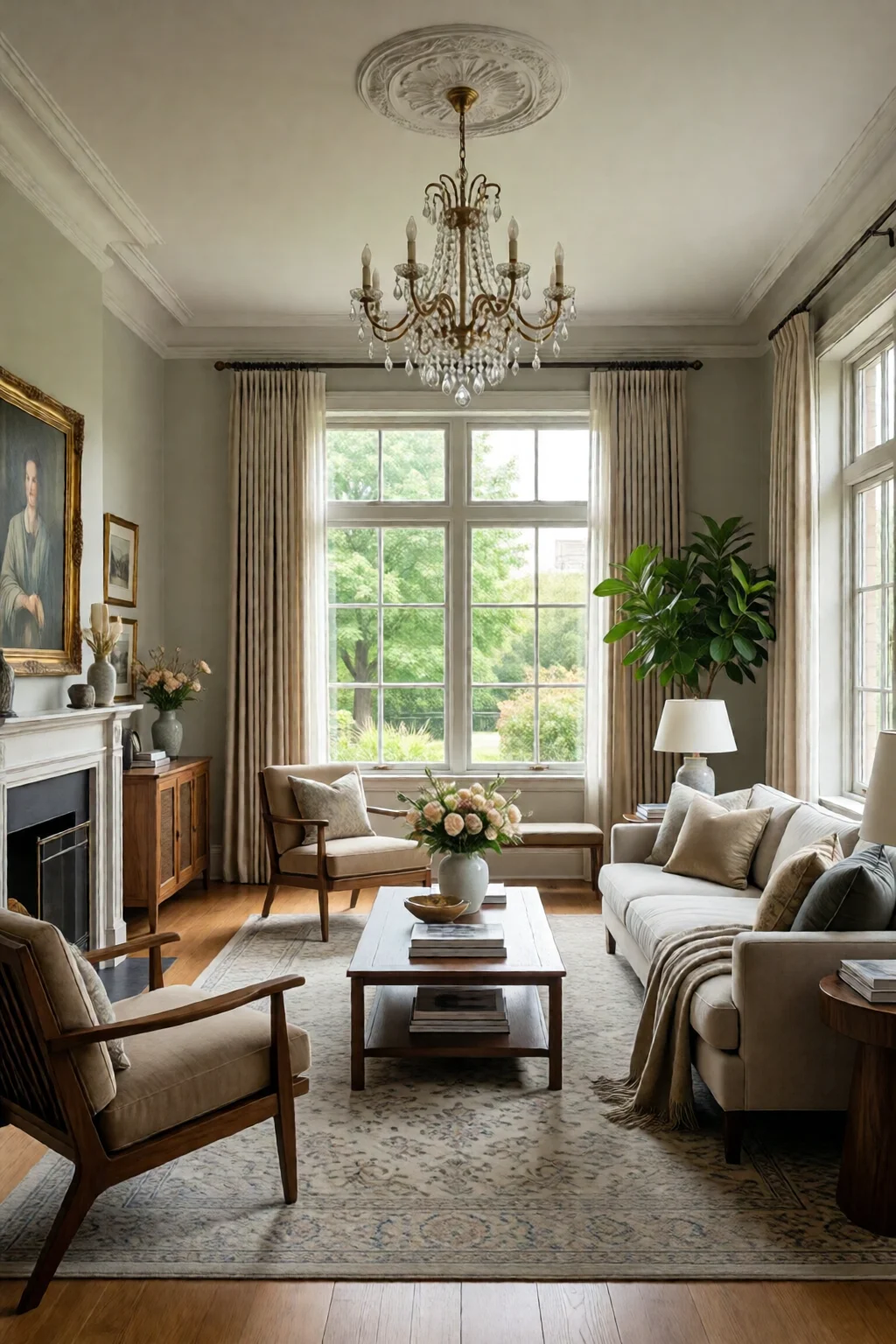
1. Defining Zones Without Walls
1.1 Use Rugs to Anchor Areas
A rug is the cheapest way to delineate a living area. I recommend a low‑pile, natural‑fiber rug like Ruggable’s “Madrone” (12 × 9 ft, $299) for high‑traffic zones. Place it under the sofa, coffee table, and armchairs; leave the surrounding hardwood exposed to keep the space feeling open. If you have a separate reading nook, a 5 × 7 ft West Elm “Pebble” rug ($179) works wonders.
1.2 Furniture Arrangement as Spatial Dividers
Instead of built‑in partitions, use furniture to create “soft walls.” A sectional with a chaise on one side can separate the TV zone from the conversation area. In my own loft, a IKEA KIVIK sectional (84 in wide, $799) faces the media wall while a pair of Article side chairs (28 in wide, $149 each) form a semi‑circle for guests. Keep traffic pathways at least 36 in wide to avoid bottlenecks.
1.3 Strategic Use of Plants
Large foliage adds height and privacy. A 6‑foot Fiddle Leaf Fig in a Pottery Barn “Sculpted Clay” pot ($149) placed behind the sofa creates a living backdrop. Smaller succulents on side tables—like Cactus Club mini‑cactus sets ($24) —add texture without overwhelming the view.
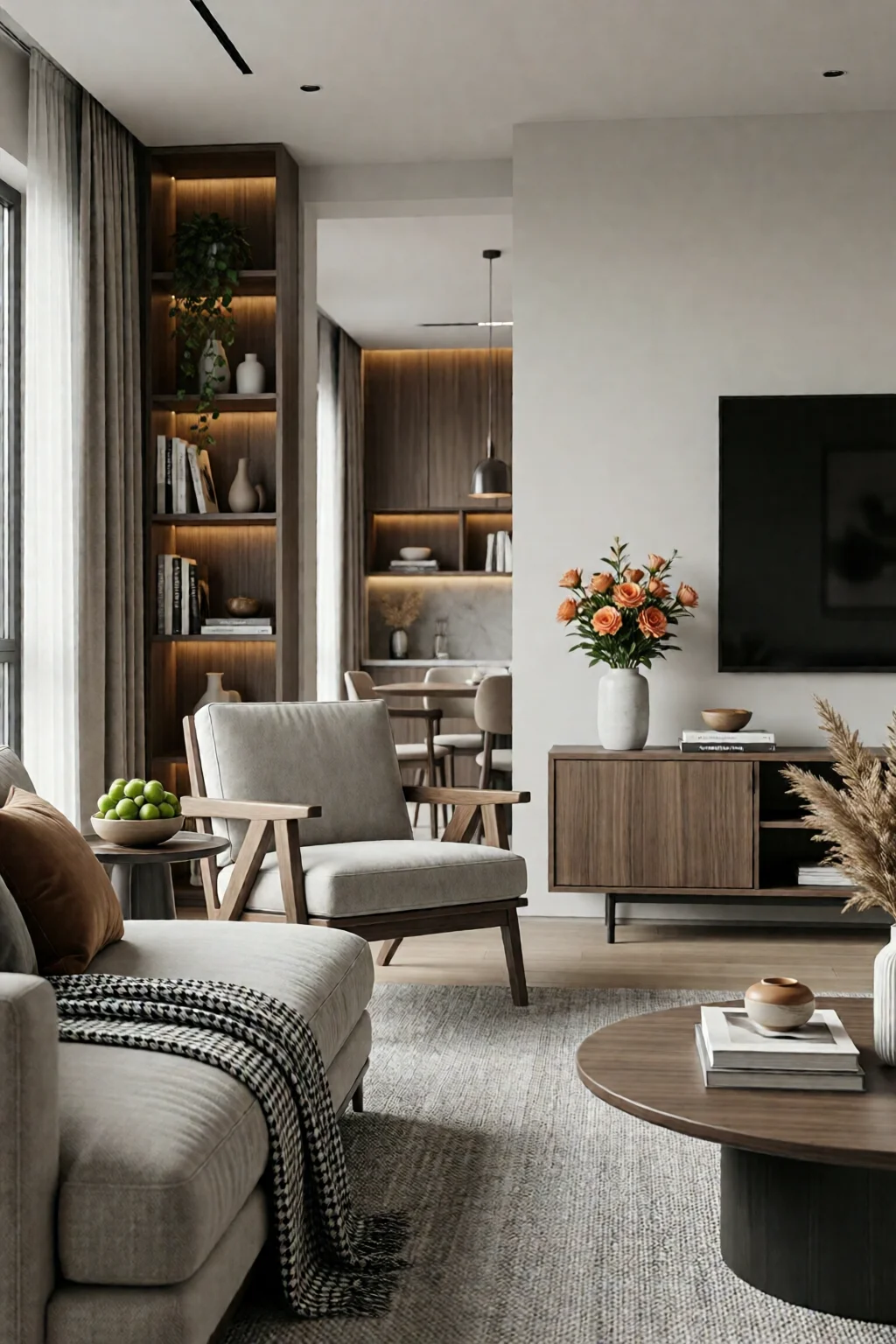
2. Choosing the Right Flooring
2.1 Hardwood vs. Engineered
Solid oak (3/4‑in thick) gives a timeless look but can warp in humid climates. Engineered hardwood, such as Bruce’s “Premium Select” 5‑mm veneer ($6.99 / sq ft), offers similar aesthetics with better stability. For a 300‑sq‑ft living area, expect a total material cost of $2,100–$3,200, plus $1,200 for installation.
2.2 Layering with Rugs
Even if you choose hardwood, layering rugs protects the finish and adds comfort. A 12‑by‑15 ft rug (see above) typically costs 15–20 % of the total flooring budget, a worthwhile investment for both durability and design.
2.3 Alternative Surfaces
Polished concrete is gaining traction for loft‑style spaces. A DIY concrete overlay kit from Quikrete costs $85 per 50‑lb bag and covers roughly 45 sq ft. Expect a 3‑day curing period before placing furniture.
3. Lighting Strategies for Depth and Drama
3.1 Layered Lighting Basics
Combine ambient, task, and accent lighting. A recessed LED downlight system (e.g., Philips Hue White Ambiance, $39 per can) provides uniform illumination. Pair it with two West Elm “Industrial” floor lamps ($199 each) for reading corners.
3.2 Statement Fixtures
A chandelier can anchor the central zone. I installed a Restoration Hardware “Gilded Globe” chandelier (30 in diameter, $1,250) at a height of 8 ft, which draws the eye upward and adds a focal point without cluttering the floor plan.
3.3 Smart Controls
Integrate a smart dimmer like the Lutron Caséta Wireless ($129) to adjust brightness per zone. Program schedules: 100 % light at 7 am for morning coffee, 30 % at 9 pm for a relaxed ambiance.
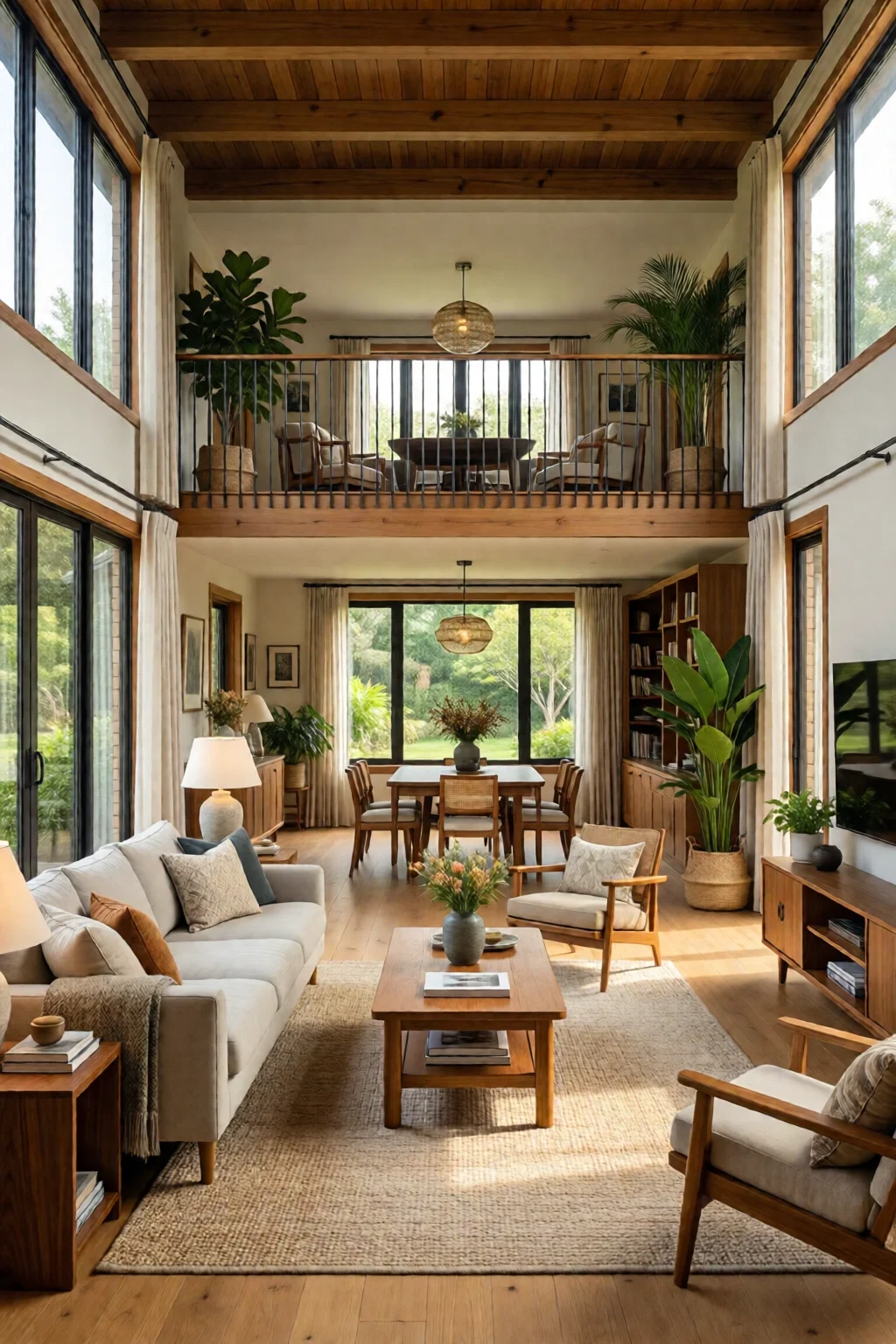
4. Color Palette and Wall Treatments
4.1 Choosing a Base Hue
Neutral bases—warm greys (e.g., Sherwin‑Williams “Agreeable Gray” SW 7029) or soft beiges—keep the space cohesive. Paint a single accent wall in a deep navy (“Naval” SW 6244) to add depth; the cost is roughly $35 per gallon, covering 350 sq ft.
4.2 Texture Over Color
In my experience, adding texture beats bold colors in open concepts. A reclaimed wood panel (12 × 8 ft, $450 from Reclaimed Wood Co.) behind the TV creates visual interest without overwhelming the palette.
4.3 Art and Mirrors
Large-scale art—think a 48 × 60 in canvas from Society6 ($120)—fills empty wall space. Mirrors double light; a 36 × 48 in framed mirror from Target ($79) placed opposite a window can make a 20‑ft ceiling feel taller.
5. Furniture Selection and Layout Tips
5.1 Scale and Proportion
Measure your space before buying. A sofa that exceeds 45 % of the room’s width can dominate the layout. I use the 1/3 rule: the main sofa should occupy roughly one‑third of the total floor area. For a 300‑sq‑ft living room, that’s about 100 sq ft, translating to a 90‑in wide sectional.
5.2 Multi‑Functional Pieces
Consider a coffee table with storage, like the IKEA LACK with hidden compartment ($49). It reduces clutter and maintains the open feel. A West Elm “Mid‑Century Media Console” (48 in wide, $399) provides cable management for tech‑heavy zones.
5.3 Mixing Materials
Combine wood, metal, and textiles. A metal frame armchair (Article “Sven” – $229) paired with a linen upholstery sofa ($799) adds visual contrast while staying cohesive.
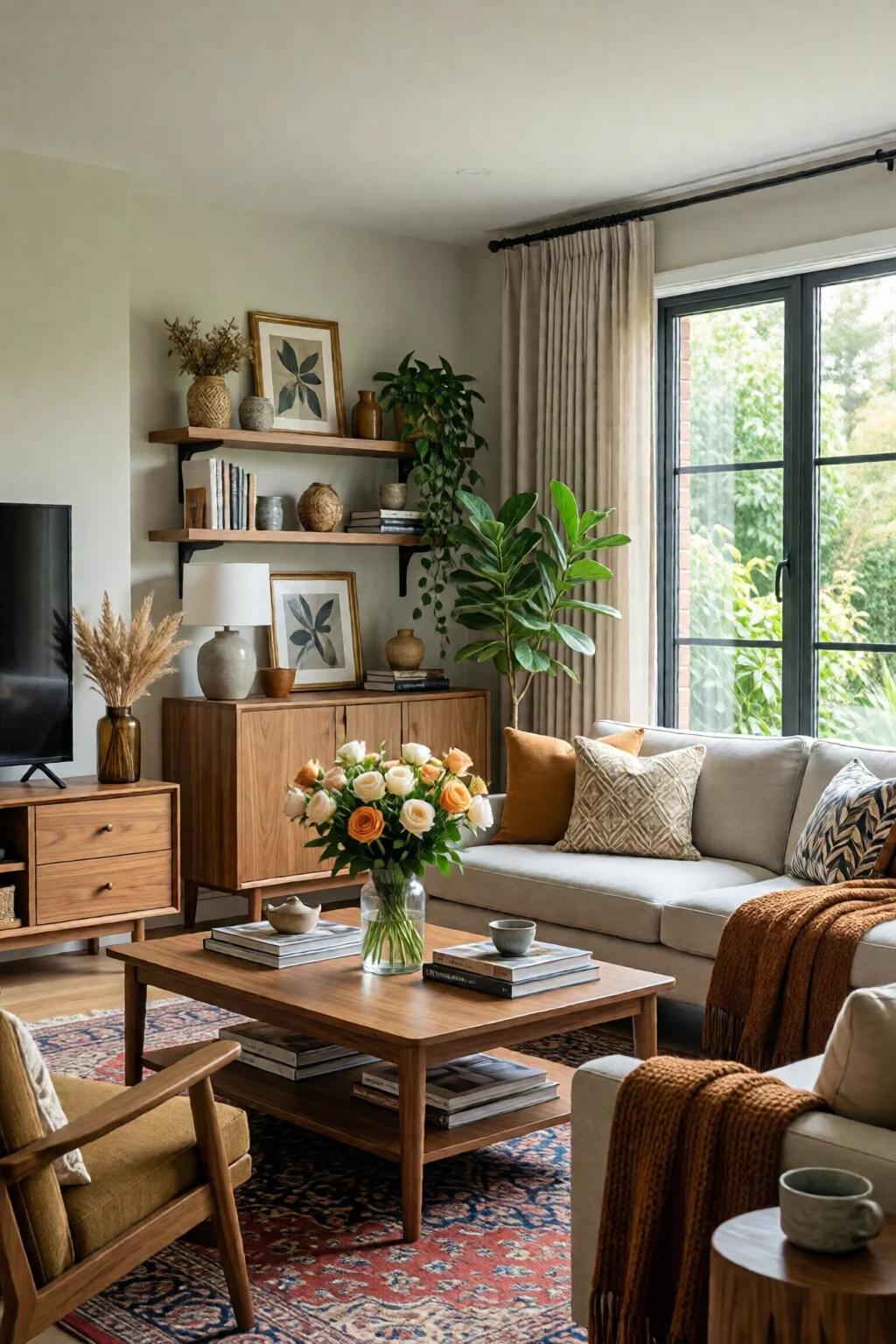
Pro Tips from Our Experience
- Start with a floor plan sketch. Use free software like Roomstyler 3D Home Planner to test furniture placement before moving anything.
- Invest in quality basics. A durable rug and solid sofa pay off over 5–7 years; cheaper items wear out and disrupt the aesthetic.
- Layer lighting early. Install recessed lights before hanging art to avoid awkward shadows.
- Don’t forget acoustics. Open spaces echo. Add a GIK Acoustics wall panel (24 × 24 in, $59) behind the TV to absorb sound.
- Use the “4‑point rule” for visual balance. Ensure that the sofa, rug, coffee table, and focal artwork each occupy distinct visual points around the room.
For those looking for built‑in storage ideas that still feel open, check out our living room built in bookshelf ideas. If budget constraints are a concern, our cozy living room ideas on a budget page offers low‑cost alternatives. Need window treatments that complement an open layout? See living room window treatment ideas. For a reading corner, explore reading nook ideas cozy corner design. And if your open concept includes a work‑from‑home zone, our home office wall decor ideas inspiring can help you blend productivity with style.
Comparison of Popular Flooring Options
| Material | Cost (per sq ft) | Installation Time | Durability (years) | Best For |
|---|---|---|---|---|
| Solid Oak Hardwood | $8–$12 | 2–3 days | 30+ | Traditional, high‑end |
| Engineered Hardwood | $6–$9 | 1–2 days | 20–25 | Modern, moisture‑prone areas |
| Polished Concrete | $4–$6 | 3–4 days (cure) | 25+ | Industrial lofts |
| Luxury Vinyl Plank (LVP) | $3–$5 | 1 day | 15–20 | High‑traffic, pet‑friendly
Frequently Asked Questions
How do I make an open concept feel cozy?
Layer textiles—rugs, throws, and cushions—in warm tones; add soft lighting with floor lamps and table lamps; and incorporate natural elements like plants and wood accents to create a lived‑in feel.
What size rug should I use in a large open space?
Aim for a rug that extends at least 24 in beyond the front legs of your sofa and chairs. In a 20 × 30 ft room, a 12 × 15 ft rug works well.
Can I use a single color on all walls in an open concept?
Yes, a monochromatic scheme can unify the space. Add interest with texture—such as a reclaimed wood accent wall or patterned wallpaper on one side.
What lighting levels are ideal for different zones?
Ambient lighting should be ~300 lux for general illumination. Task areas (reading, work) need 500–600 lux, while accent lighting (art, architectural features) ranges from 100–200 lux.
How much should I budget for a complete open‑concept makeover?
A mid‑range remodel typically falls between $25,000 and $45,000, covering flooring, paint, furniture, lighting, and accessories. DIY and selective splurges can reduce costs by 20–30 %.
Conclusion: Your Next Steps
Open‑concept living room decorating isn’t about stuffing a room with décor; it’s about curating zones that flow, lighting that adapts, and textures that invite touch. Start with a floor plan, pick a unifying color, lay a quality rug, and then layer furniture and lighting strategically. Remember the numbers: a 12 × 15 ft rug ($299), a sectional around 90 in wide ($799), and recessed lighting ($39 per can) are solid benchmarks to keep your budget in check.
Take one action today—whether it’s ordering a rug, repainting an accent wall, or sketching your layout. Within a few weeks you’ll see your open‑concept space transform from a blank canvas into a warm, functional home that reflects your style.
1 commentaire sur « How to Open Concept Living Room Decorating (Expert Tips) »